

Dua e Qunoot Word for Word
Education Contains ads
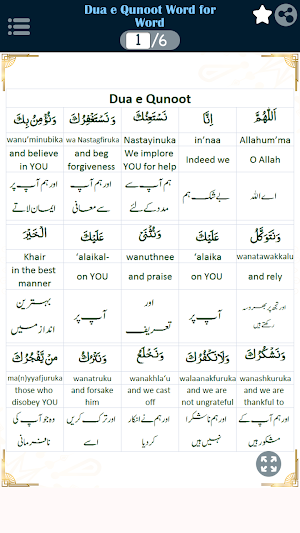
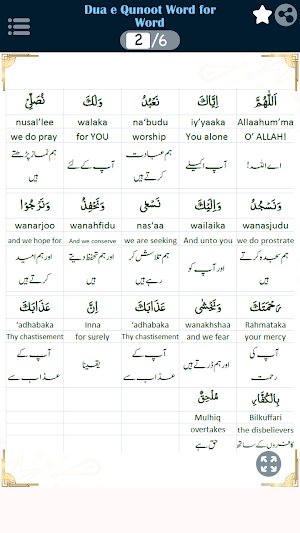
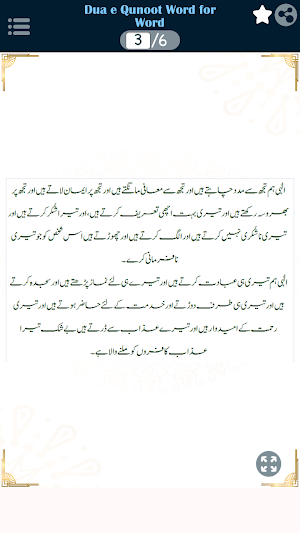
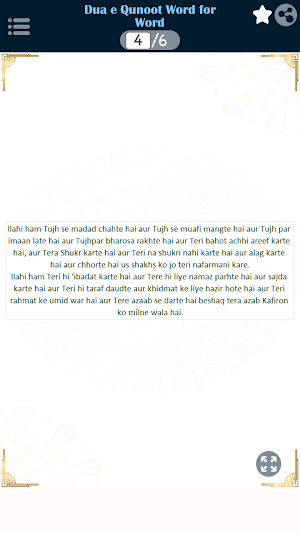
Dua e Qunoot along with word for word Urdu, English and Hindi translation.
- Downloads
- 100+
- on Google Play
- Price
- Free
- No in-app purchases
- Updated
- Feb 20
- 2022 · v1.0
Screenshots


About Dua e Qunoot Word for Word
Alhamdulilla we are Muslims and we should perform our prayers with the Islamic rules and regulations. Dua e Qunoot (Kanoot) is a supplication recited in prayer to seek refuge from calamities and ask for Allah’s blessings, and thus it’s important to be recited in salat ul witr (Namaz e Esha). Dua e Qanoot (Kanut) is an Islamic application for you with urdu translation. This app will enhance your learning and understanding as it is developed to provide an easy way to learn Dua e Qunoot.
"Qunut" is a supplication type of prayer made while standing in Islam. For example, it is sunnah (recommended) to supplicate with qunut in the witr prayer during the entire year.
"Qunūt" (Arabic: القنوت) literally means "being obedient" or "the act of standing" in Classical Arabic. The word duʿā' (Arabic: دعاء) is Arabic for supplication, so the longer phrase duʿā' qunūt (Dua e Qunut) is sometimes used.
Qunot has many linguistic meanings, such as humility, obedience and devotion. However, it is more understood to be a special du'a which is recited during the prayer.
Ahmad, Muhammad ibn `Isa at-Tirmidhi (Tirmizi / Tirmzi), and Abu Dawood (Daud) record that Hasan (Hassan) ibn Ali learned the prayer from Muhammad . Dawood (Dawod) further added that Muhammad used to recite al-Qunut whenever a major difficulty or disaster befell the Muslims. Ibn Ali said: "The Messenger of Allah taught me the [following] words to say during the witr prayer:
"O Allah! Guide me with those whom You have Guided, and strengthen me with those whom You have given strength, take me to Your care with those whom You have taken to Your care, Bless me in what You have given me, Protect me from the evil You have Ordained. Surely You Command and are not commanded, and none whom You have committed to Your care shall be humiliated [and none whom You have Taken as an enemy shall taste glory]. You are Blessed, our Lord, and Exalted."
Muhammad used to recite Du'a al-Qunut during Salat al-Fajr (Fajr ki Namaz / Salah / Salat / Solat , Salaat), Witr and sometimes during other prayers throughout the year. It is one of those Sunnahs (Prophetic traditions) which many Muslims do not practice today. He would perform the Qunut in the last Rak'ah of the Salaah after performing Ruku and saying "Sami'Allahu liman hamidah" (Allah listens to those who praise him); then put hands across navel/chest or raise hands (whilst still focusing on the place of Sujud) and supplicate the Qunut, after which He would make Sujud and conclude the prayer.
It is permissible to make the qunut before going into ruku (bowing), or it may be recited when one stands up straight after the ruku. Humaid says: "I asked Anas: 'Is the qunut before or after the ruku?' he said: 'We would do it before or after." This hadith (Hadees / Hades / Hadis / Hadeeth) was related by Ibn Majah and Muhammad ibn Nasr. In Fath al-Bari, Ibn Hajar al-Asqalani comments that its chain is faultless.
But widely, the scholars of Islam and the regular practice at Masjid al-Haram, Mecca (Makkah), is to recite the Qunut Prayer after getting up from Ruku, in the last Rakah of Witr i.e., the 3rd Rakah of Witr at Isha (The late night prayer)
According to the Hanafi (Hanfi) opinion, one is supposed to give Takbir (Say Allahu Akbar and raise his palms till ear lobes and hold them back below or above navel with right hand over left) before going into Ruku in 3rd Rakah and recite the Following Qunut Prayer also called as Dua Qunut (Prayer of Qunoot). After reciting the Dua, Muslims then bend in ruku and perform the rest of the Salath.
Du'a qunut is recommended to be recited in the Witr prayer. The Witr prayer, according to Imam Abu Hanifah is wajib (obligation). The other Imams consider the Witr prayer as Sunnah Mu'akkadah (a recommendation). It can be offered after the Isha prayer right up to the break of dawn.
App contains Dua e Qunoot along with word for word translation in Urdu and English. It also contains Hindi translation and Roman Urdu translation.
User reviews

Nice app
Alternatives to Dua e Qunoot Word for Word
Looking for apps like Dua e Qunoot Word for Word? Here are 6 similar Android apps on Google Play. The highest rated is نماز کا مکمل طریقہ - Namaz Ka (5.0/5), and all 6 are free to download.
-
Kids Room Decoration Design 4.1
-
نماز کا مکمل طریقہ - Namaz Ka 5.0
-
Maani Al-Quran Word for Word U
-
Masnoon Duain مسنون دعائیں in
-
سورة يس - القرآن الكريم 5.0
-
Noorani Qaida (نورانی قاعدہ) R 4.9
| App | Rating | Price | Installs | Last updated | Compare |
|---|---|---|---|---|---|
| Dua e Qunoot Word for Word | – | Free | 100+ | Feb 20, 2022 | |
| Kids Room Decoration Design | 4.1 / 5 | Free | 10,000+ | Dec 25, 2016 | Compare |
| نماز کا مکمل طریقہ - Namaz Ka | 5.0 / 5 | Free | 5,000+ | Jun 10, 2020 | Compare |
| Maani Al-Quran Word for Word U | – | Free | 10,000+ | Jun 5, 2020 | Compare |
| Masnoon Duain مسنون دعائیں in | – | Free | 50,000+ | Jul 22, 2020 | Compare |
| سورة يس - القرآن الكريم | 5.0 / 5 | Free | 10,000+ | Apr 8, 2020 | Compare |
| Noorani Qaida (نورانی قاعدہ) R | 4.9 / 5 | Free | 10,000+ | Jan 24, 2017 | Compare |
Similar apps on Google Play
- Kids Room Decoration Design
- نماز کا مکمل طریقہ - Namaz Ka
- Maani Al-Quran Word for Word U
- Masnoon Duain مسنون دعائیں in
- سورة يس - القرآن الكريم
- Noorani Qaida (نورانی قاعدہ) R
- Noorani Qaida in Pashto (پښتو)
- Fazail e Amaal in Urdu - فضائل
- Dua e Qunoot (دعاء قنوت) with
- Bal e Jibreel by Allama Iqbal
- Faizan e Tajveed - فیضان تجوید
- Pyare Nabi(PBUH) ki Sunnatain
- Hazrat Khalid Bin Waleed Urdu
- Asan Tajweed Qaida of Holy Qur
- Aqwal Hazrat Ali R.A + Baatien
- عربی اردو بول چال - Arbi Urdu
- Khwabon ki Tabeer - خوابوں کی
- Darood e Taj, Tanjeena, Mahi &
- علامہ اقبال کی شاعری- Allama I
- Umrah Ki Adaigi Ka Asan Tarika
- Rizq Mein Izafa Ki Dua - Dolat
- انگلش بولنا سیکھیں صرف 30 دن م
- Baby Clothes Collection Ideas
- قرآنی وظائف
- Birthday Cake Decoration Ideas
- Surah Kausar (سورة الكوثر) Col
- Ambiya Ke Qissay in Urdu - انب
- Hazrat Ali (R.A) Ke 100 Qissay
- Shajra e Nasab - شجرہِ نسب
- Last 10 Surah of Quran - PARA
- Baby Shower Ideas
- Islamic History in Urdu Part 1
- Sad Poetry in Urdu - Dard Shay
- دعائے قنوت - نمازِ وتر
- Wedding Cake Designs
- Ghusal Ke Masail -غسل کے مسائل
- Sassi Punnu - Urdu Love Story
- دعائے گنج العرش بمع اردو ترجمہ
- Makeup Tips Step by Step Guide
- Namaz e Janaza Ka Tarika Urdu
- Quran se Ilaj
- Salatul Tasbih - صلوٰۃ التسبیح
- General Knowledge (GK) in URDU
- Al-Qaida Al-Noorania in Arabic
- Quran e Pak رنگین تجویدی قرآنِ
- Surah Falaq (سورة الفلق) Color
- علامہ اقبال کی مشہور شاعری - ک
- Learn Computer in 7 Days URDU
- Sugar Ka Ilaj - شوگر کا علاج
- Learn Photoshop in URDU
- Interview Tips - انٹرویو ٹپس
- Learn InPage in URDU - اِن پیج
- Allama Iqbal & Falsafa e Hayat
- Ghussay Ka Ilaj - غصے کا علاج
- Zaitoon Se Ilaj زیتون سے علاج
- Beauty Tips in Urdu -بیوٹی ٹپس
- Cholesterol Se Nijaat
- Urdu Muhavare aur Kahanyian
- Remove Pimples Acne in 1 Week
- Qasida Al-Burda Poem of Mantle
- Qaseed Burda Shareef with URDU
- Job Search Tips in URDU ملازمت
- Exam & Paper Solving Tips URDU
- Talaq Khula Aur Iddat K Masail
- Masjid Ke Adaab - مسجد کے آداب
- 6 Fundamentals of Islam in Eng
- Khatam e Nabuwat Course Urdu
- الدعاء ويليه العلاج بالرقى
- Tafsir Ibne Abbas Part-1 Urdu
- Madani Panj Surah in Urdu - مد
- Benefits of Ya Qahhar -يا قهار
- General Knowledge in Urdu -CSS
- Qurbani ke Masail مسائل قربانی
- Rehmat Da Khazana پنجابی نعتاں
- Laila Majnu - Urdu Love Story
- Tareekh Ibn Kaseer Part-2 URDU
- Tareekh Ibn Kaseer Part-1 URDU
- Saltanat e Usmania in Urdu
- Hazrat Imam Hassan 100 Waqiat
- Nafal Namaz نفل نماز ki Barkat
- Adhan with English Translation
- Maa Ka Muqam - ماں کا مقام
- Manzil - Dua from Quran Urdu
- Jawani Ki Barbadi+Roohani Ilaj
- Sheikh Chili Ki Urdu Kahaniyan
- Sahih Namaz e Nabavi نماز نبوی
- Hazrat Imam Hussain 100 Qissay
- Rahnuma e Tableeghi Safar 6 No
- Hazrat Usman r.a Ke 100 Qissay
- Musafir Ki Namaz مسافر کی نماز
- Surah Al Mudassir Urdu Tafsir
- Surah Muzammil Urdu Tafsir
- Surah Mulk Urdu Terjuma Tafsir
- Surah Yaseen -Terjuma o Tafsir
- Janat Mein Le Janay Walay Amal
- Aaqa Ka Mahina - Shaban
- Darood Sharif Ke Fazail - درود
- Khilafat o Malookiat - Maududi
- Karbala کربلا Ka Khooni Manzar
- Mutah - Fiqa Jafria Ke Mutabiq
- Faizan e Namaz - فیضانِ نماز
- Tohfa e Shadi - تحفۂ شادی
- Madani Qaida Bangla - Tajweed
- Madani Qaida Hindi - Tajweed
- Story of Hazrat Ayub in Urdu
- Biography of Hazrat Yunus Urdu
- Hazrat Ibrahim (R.A) Ka Qissa
- Hazrat Ayesha ra Ke 100 Qissay
- Hazrat Nuh (نوح) A.S Ka Qissa
- Kalonji Se Ilaj کلونجی سے علاج
- Hazrat Lut (لوط) A.S Ka Qissa
- Hazrat Fatima r.a Ke 100 Qisay
- 17 Wazaif Se Zindagi Asaan
- Surat Mulk Se Mushkilat Ka Hal
- Surat Inam Se Mushkilat Ka Hal
- Surah Quraish Ke Karishmat
- Surat Baqarah Se Mushkilat Hal
- Surat Kausar کوثر Ke Karishmat
- Surat Kafiroon - Mushkilat Hal
- Surat Fateha+Ikhlas -Karishmat
- Ism e Azam Se Mushkilat Ka Hal
- 4 Qul Se Mushkilat Ka Hal Urdu
- Bismillah Se Mushkilat Ka Hal
- Hakeem Luqman Ki 50 Naseehaten
- Lazzat e Zikr - لذتِ ذکر
- Badnazri بد نظری K 14 Nuqsanat
- Dua Qubool Na Hone Ki Wajuhat
- Nad e Ali se Mushkilat Ka Hal
- Miswak K Faiday مسواک کے فضائل
- Hakeemi Nuskhe - حکیمی نسخے
- Pyare Rasoolﷺ Ki Peshangoyian
- Gharelu Ilaj -Desi Totkay Urdu
- Subah o Sham Ke Azkar - Dua'in
- Maloomat e Quran - Islami Quiz
- Hazrat Khizar (A.S) Ka Qissa
- Faizan e Jumma - فیضانِ جمعہ
- Biography of Hazrat Suleman AS
- Hazrat Yousuf Ka Qissa in Urdu
- Namaz e Taraweeh - 20 Rakat
- Shehad se Har Bemari Ka Ilaj
- Aulad Ke Liye Duain (دعائیں)
- Qaza Namaz Ka Tarika -قضا نماز
- Aurton Ki Namaz عورتوں کی نماز
- Hifazat Ki Duain حفاظتی دعائیں
- Itikaf اعتکاف Ke Amal o Wazaif
- Ibadat e Ramzan-ul-Mubarak
- Laylatul Qadr شب قدر کی عبادات
- Zakat (زکوٰۃ) Ke Haqdar Kon?
- Namaz of Females and Mistakes
- Sajda Sahw Ke Masail سجدہ سہو