

Qasida Al-Burda Poem of Mantle
Education In-app purchases Contains ads
Qasida Al-Burda (The Poem of the Mantle) is a poem in praise of The Prophet ﷺ.
- Downloads
- 1+
- on Google Play
- Price
- Free
- In-app purchases
- Updated
- Nov 26
- 2022 · v1.0
Screenshots


About Qasida Al-Burda Poem of Mantle
What is the Burda?
Introduction
The Qasida Al-Burda (The Poem of the Mantle), known as The Burda, is a poem in praise of The Prophet ﷺ. It was composed by Al Busiri in the 7th century Hijri and is one of the most widely recited and memorised poems in the world. The actual title of the poem is The Celestial Lights in Praise of the Best of Creation (الكواكب الدرية في مدح خير البرية).
It is most widely known by the refrain, often sung between verses:
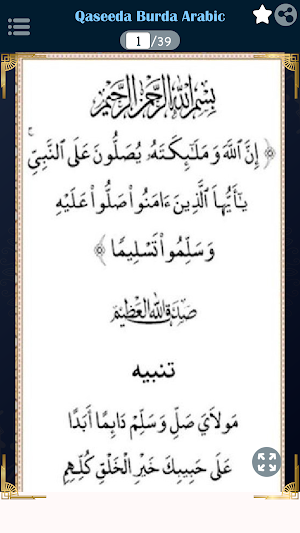
مَولَاىَ صَلِّ وَسَلِّمْ دَائِمًا أَبَدًا
ِعَلَى حَبِيبِكَ خَيرِ الْخَلْقِ كُلِّهِم
Structure
The Burda consists of ten chapters. Al Busiri starts by expressing his own love for The Prophet ﷺ and then mentions his regret for past errors. The middle chapters celebrate the life of The Prophet ﷺ - his birth, his miracles, the Qur'an, his night journey and martial struggles. The final chapters of the Burda are Al Busiri's plea for The Prophet's ﷺ intercession and Allah's mercy.
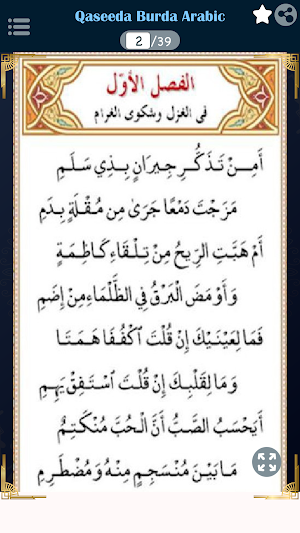
Chapter 1: Nostalgic Rhapsody and Love Complaint
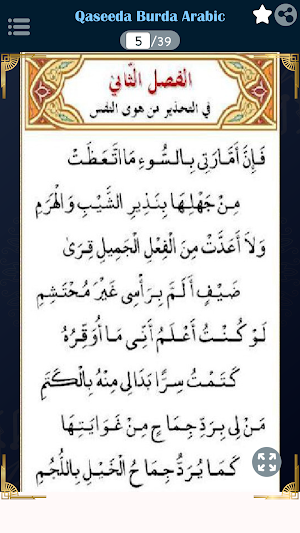
Chapter 2: Warnings about the Caprices of the Ego
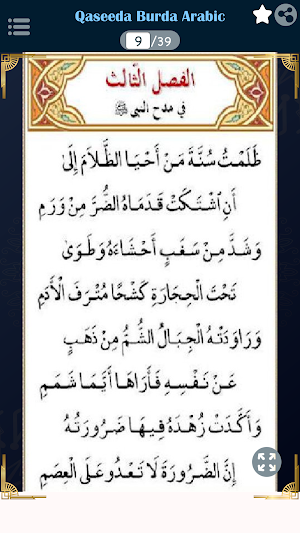
Chapter 3: Praise of the Prophet ﷺ
Chapter 4: On The Prophet's Birth
Chapter 5: The Prophet's Miracles
Chapter 6: The Nobility of the Qur’an and its Merit
Chapter 7: The Prophet’s Miraculous Night Journey and Celestial Ascension
Chapter 8: The Prophet’s Jihad
Chapter 9: Seeking Intercession through the Prophet ﷺ
Chapter 10: Intimate Discourse and the Petition of Needs
The Burda's Story
Al Busiri was affected by a debilitating sickness. He decided to write the Burda as a means of seeking Allah's forgiveness and The Prophet's ﷺ intercession. After composing Burda he saw a dream, where The Prophet ﷺ covered the Al Busiri with his ﷺ mantle (burda). He was cured as from his illness when he woke up.
The Original Burda
Al Busiri's Burda is the most famous poem known as the Burda, but the poem originally known by that name was composed by the poet Ka'b ibn Zuhayr, one of the companions of The Prophet ﷺ. Before accepting Islam, Ka'b used his poetry to slander the Muslims. He later accepted Islam, and recited a poem to The Prophet ﷺ and other companions that he composed to express his remorse over his past actions. When he finished reciting it, The Prophet ﷺ threw his mantle (burda) to Ka'b. His poem was therefore known as the Burda.
Other spellings include Burdah, Qasidah Burdah, Qaseeda Burdah and it is also known as the Burda Shareef. It has been translated into a number of languages.
The Author
The author's full name is Muhammad b. Said b. Hammad b. Muhsin b. Abd Allah b. Sanhaj b. Hilal b. al-Sanhaji al-Busiri. He was of Berber lineage, but was born in Dallas, Egypt the year 608 AH. He emigrated to Cairo when young and memorised the Qur’an and learned the elementary sciences of the Sharīʿah and the Arabic language. He initially earned his living through writing calligraphy on tomobstones, and was soon sought out for his skill in calligraphy.
Al-Busiri went on to assume several public roles within Cairo and its surrounding areas, and after a while he started working for the Egyptian state as a clerk in the town of Balis in the eastern province, where he stayed for some years. However, he soon clashed with the civil servants around him and felt annoyance at their character after witnessing their faults. As a result, Al-Busiri compiled a number of invective poems against them, exposing their infamies. This earned him the wrath of the political elite, and soon grew weary of public office and removed himself from all government work. He returned to Cairo where he opened a primary school for children.
He then moved to Alexandria, which was a centre of sacred knowledge and Sufism. He focused his efforts on reading the prophetic biographical literature and learning about The Prophet ﷺ. He expended enormous efforts and dedicated all of his poetry and craft to praising The Prophet ﷺ. Al-Busiri passed away in Alexandria in 694 AH at the age of eighty-seven.
Alternatives to Qasida Al-Burda Poem of Mantle
Looking for apps like Qasida Al-Burda Poem of Mantle? Here are 6 similar Android apps on Google Play. The highest rated is نماز کا مکمل طریقہ - Namaz Ka (5.0/5), and all 6 are free to download.
-
نماز کا مکمل طریقہ - Namaz Ka 5.0
-
Kids Room Decoration Design 4.1
-
سورة يس - القرآن الكريم 5.0
-
Ambiya Ke Qissay in Urdu - انب
-
Noorani Qaida (نورانی قاعدہ) R 4.9
-
Maani Al-Quran Word for Word U
| App | Rating | Price | Installs | Last updated | Compare |
|---|---|---|---|---|---|
| Qasida Al-Burda Poem of Mantle | – | Free | 1+ | Nov 26, 2022 | |
| نماز کا مکمل طریقہ - Namaz Ka | 5.0 / 5 | Free | 5,000+ | Jun 10, 2020 | Compare |
| Kids Room Decoration Design | 4.1 / 5 | Free | 10,000+ | Dec 25, 2016 | Compare |
| سورة يس - القرآن الكريم | 5.0 / 5 | Free | 10,000+ | Apr 8, 2020 | Compare |
| Ambiya Ke Qissay in Urdu - انب | – | Free | 50,000+ | Mar 23, 2017 | Compare |
| Noorani Qaida (نورانی قاعدہ) R | 4.9 / 5 | Free | 10,000+ | Jan 24, 2017 | Compare |
| Maani Al-Quran Word for Word U | – | Free | 10,000+ | Jun 5, 2020 | Compare |
Similar apps on Google Play
- نماز کا مکمل طریقہ - Namaz Ka
- Kids Room Decoration Design
- سورة يس - القرآن الكريم
- Ambiya Ke Qissay in Urdu - انب
- Noorani Qaida (نورانی قاعدہ) R
- Maani Al-Quran Word for Word U
- 40 Hadith An-Nawawi - الأربعون
- Islamic History in Urdu Part 1
- Masnoon Duain مسنون دعائیں in
- ٦ کلمے اردو ترجمہ کے ساتھ
- انگلش بولنا سیکھیں صرف 30 دن م
- Blue Christmas Wallpapers 2022
- Aqwal Hazrat Ali R.A + Baatien
- Boots Fashion Ideas for Female
- 1000 Ahadees (أحاديث) in URDU
- Bedroom Decoration Ideas 2022
- Namaz نماز Ka Asaan Tareeqa +
- احادیث نبویﷺ مع اردو ترجمہ
- Astrology in Urdu - علمِ نجوم
- Sad Poetry in Urdu - Dard Shay
- Ring Designs
- Horoscope and Stars in Urdu
- Urdu Ahadees
- Dua e Qunoot (دعاء قنوت) with
- Noorani Qaida in Pashto (پښتو)
- Hazrat Yousuf Ka Qissa in Urdu
- Umrah Ki Adaigi Ka Asan Tarika
- Learn English Grammar in Urdu
- Namaz e Janaza Ka Tarika Urdu
- Salah Guide Step by Step Tutor
- دعائے گنج العرش بمع اردو ترجمہ
- Pyare Nabi(PBUH) ki Sunnatain
- Seerat Un NABI (S.A.W) in URDU
- علامہ اقبال کی شاعری- Allama I
- Rizq Mein Izafa Ki Dua - Dolat
- Makeup Tips Step by Step Guide
- Merry Christmas Wallpapers
- Quran e Pak رنگین تجویدی قرآنِ
- Fazail e Amaal in Urdu - فضائل
- Pathan Jokes in Urdu - لطیفے
- Camping Ideas
- Surah Yusuf (سورة يوسف) with U
- Hazrat Imam Hussain 100 Qissay
- Qaza Namaz Ka Tarika -قضا نماز
- Women Executive Suit Designs
- جناتی کہانیاں - Drawni Kahaniy
- Seat Design Gallery - Chair De
- Surah Nas (سورة الناس) with Ur
- دعائے قنوت - نمازِ وتر
- Jadugar Baniye (جادوگر بنیے)-
- Manzil - Dua from Quran Urdu
- Carpet Design Ideas
- High Heel Shoes Designs 2022
- Darood e Taj, Tanjeena, Mahi &
- Baby Clothes Collection Ideas
- Aquarium Decoration Ideas
- Namaz e Jafria - Shia Ki Namaz
- Jadu Tona Ka Ilaj
- Iqra Qaida - Quran Seekhain
- Ghussay Ka Ilaj - غصے کا علاج
- Beauty Tips in Urdu -بیوٹی ٹپس
- Cholesterol Se Nijaat
- Urdu Muhavare aur Kahanyian
- Remove Pimples Acne in 1 Week
- Qasida Al-Burda Poem of Mantle
- Qaseed Burda Shareef with URDU
- Job Search Tips in URDU ملازمت
- Exam & Paper Solving Tips URDU
- Talaq Khula Aur Iddat K Masail
- Masjid Ke Adaab - مسجد کے آداب
- 6 Fundamentals of Islam in Eng
- Khatam e Nabuwat Course Urdu
- الدعاء ويليه العلاج بالرقى
- Tafsir Ibne Abbas Part-1 Urdu
- Wedding Bouquet Designs
- Benefits of Ya Qahhar -يا قهار
- General Knowledge in Urdu -CSS
- Qurbani ke Masail مسائل قربانی
- Rehmat Da Khazana پنجابی نعتاں
- Sassi Punnu - Urdu Love Story
- Laila Majnu - Urdu Love Story
- Tareekh Ibn Kaseer Part-2 URDU
- Tareekh Ibn Kaseer Part-1 URDU
- Saltanat e Usmania in Urdu
- Birthday Cake Decoration Ideas
- Hazrat Imam Hassan 100 Waqiat
- Nafal Namaz نفل نماز ki Barkat
- Adhan with English Translation
- Maa Ka Muqam - ماں کا مقام
- Surah Al A'la (سورة الأعلى) Co
- Jawani Ki Barbadi+Roohani Ilaj
- Sheikh Chili Ki Urdu Kahaniyan
- Sahih Namaz e Nabavi نماز نبوی
- Tajweed Rules in Urdu & Englis
- Rahnuma e Tableeghi Safar 6 No
- Hazrat Usman r.a Ke 100 Qissay
- Ghusal Ke Masail -غسل کے مسائل
- Musafir Ki Namaz مسافر کی نماز
- Surah Al Mudassir Urdu Tafsir
- Surah Muzammil Urdu Tafsir
- Surah Mulk Urdu Terjuma Tafsir
- Surah Rahman Terjuma o Tafsir
- Surah Yaseen -Terjuma o Tafsir
- Janat Mein Le Janay Walay Amal
- Aaqa Ka Mahina - Shaban
- Darood Sharif Ke Fazail - درود
- Khilafat o Malookiat - Maududi
- Karbala کربلا Ka Khooni Manzar
- Mutah - Fiqa Jafria Ke Mutabiq
- Faizan e Namaz - فیضانِ نماز
- Shajra e Nasab - شجرہِ نسب
- Tohfa e Shadi - تحفۂ شادی
- Madani Qaida Bangla - Tajweed
- Madani Qaida Hindi - Tajweed
- Story of Hazrat Ayub in Urdu
- Biography of Hazrat Yunus Urdu
- Hazrat Ibrahim (R.A) Ka Qissa
- Hazrat Ayesha ra Ke 100 Qissay
- Hazrat Nuh (نوح) A.S Ka Qissa
- Kalonji Se Ilaj کلونجی سے علاج
- Hazrat Lut (لوط) A.S Ka Qissa
- Hazrat Fatima r.a Ke 100 Qisay
- 17 Wazaif Se Zindagi Asaan
- Surat Mulk Se Mushkilat Ka Hal
- Surat Inam Se Mushkilat Ka Hal
- Surah Quraish Ke Karishmat
- Surat Baqarah Se Mushkilat Hal
- Surat Kausar کوثر Ke Karishmat
- Surat Kafiroon - Mushkilat Hal
- Surat Fateha+Ikhlas -Karishmat
- Ism e Azam Se Mushkilat Ka Hal
- 4 Qul Se Mushkilat Ka Hal Urdu
- Bismillah Se Mushkilat Ka Hal
- Hakeem Luqman Ki 50 Naseehaten
- Lazzat e Zikr - لذتِ ذکر
- Badnazri بد نظری K 14 Nuqsanat
- Dua Qubool Na Hone Ki Wajuhat
- Nad e Ali se Mushkilat Ka Hal
- Miswak K Faiday مسواک کے فضائل
- Hakeemi Nuskhe - حکیمی نسخے
- Pyare Rasoolﷺ Ki Peshangoyian
- Gharelu Ilaj -Desi Totkay Urdu
- Subah o Sham Ke Azkar - Dua'in
- Maloomat e Quran - Islami Quiz
- Hazrat Khizar (A.S) Ka Qissa
- Faizan e Jumma - فیضانِ جمعہ
- Biography of Hazrat Suleman AS
- Bal e Jibreel by Allama Iqbal
- Namaz e Taraweeh - 20 Rakat
- Shehad se Har Bemari Ka Ilaj