
Surah Tahrim (سورة التحريم) Colorful Tajweed
Pak Appz Education Contains ads
At-Tahrim "Banning, Prohibition" is the 66th chapter (sura) of Holy the Quran
- Rating
- 4.2
- 10 ratings
- Downloads
- 1K+
- on Google Play
- Price
- Free
- No in-app purchases
- Updated
- Jul 1
- 2020 · v1.0
Screenshots
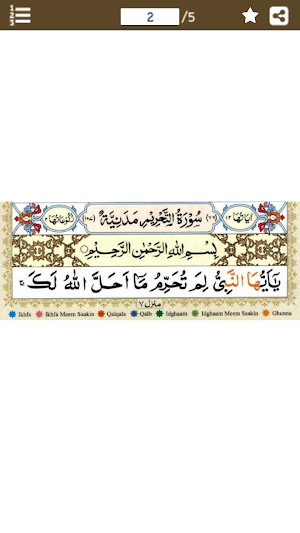
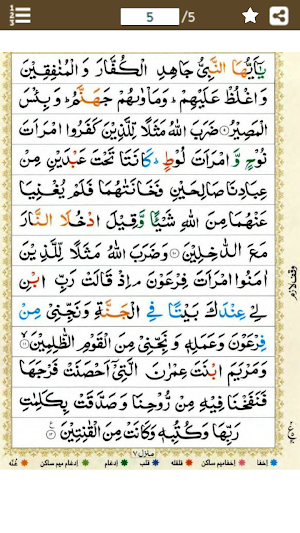
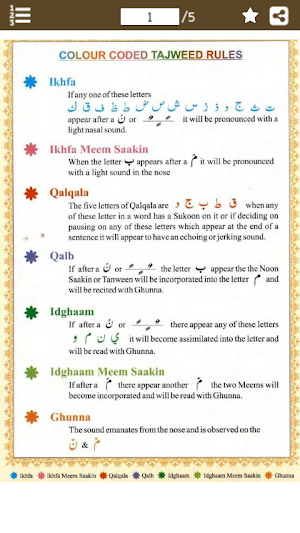



About Surah Tahrim (سورة التحريم) Colorful Tajweed
At-Tahrim (Arabic: التحريم, "Banning, Prohibition") is the 66th chapter (sura) of the Quran (Qur'an / Quraan) and contains 12 verses (ayah). This is a Surah which deals with questions regarding Muhammad's (PBUH) wives.
Name of the Surah:
The Surah derived its name from the words lima tuharrimu of the very first verse. This too is not a title of its subject matter, but the name implies that it is the Surah in which the incident of tahrim (prohibition, forbiddance) has been mentioned.
Theme & Subject Matter:
A Pakistani Muslim theologian, Quran (AlQuran / Al-Quran) scholar, Islamic modernist, exegete and educationist Javed Ahmad Ghamidi (born 1951) summarize the theme of the surah as follows:
The theme of Surah At-Tahrim is to inform Muslims how, at times of showing love and affection, they should try to keep themselves and their families within the limits prescribed by God. Moreover, it is emphasized that each person should remain aware that the only thing that will be of avail to him before God is his deeds. In their absence, association with the greatest of personalities will not be of any benefit.
Hadith / Hadees:
The first and foremost exegesis / tafsir of the Qur'an (Mushaf / Koran / Kuran) is found in hadith of Hazrat Muhammad (S.A.W). Although scholars including ibn Taymiyyah claim that Hazrat Muhammad (S.A.W) has commented on the whole of the Qur'an (Al-Qur'an / AlQur'an), others including Ghazali cite the limited amount of narratives, thus indicating that he has commented only on a portion of the Qur'an. Hadis (حديث) is literally "speech" or "report", that is a recorded saying or tradition of Muhammad validated by isnad; with Sirah Rasul Allah these comprise the sunnah and reveal shariah. According to Hazrat Aishah (R.A), the life of Prophet Muhammad (PBUH) was practical implementation of Qur'an. Therefore, mention in hadith elevates the importance of the pertinent surah from a certain perspective. Ibn Abbas is known for his knowledge of traditions as well as his critical interpretation of the Qur'an. From early on, he gathered information from other companions of Hazrat Muhammad (S.A.W) and gave classes and wrote commentaries.
Sa'id ibn Jubayr narrated that Ibn 'Abbas said: "A man came to him and said: 'I have made my wife forbidden to myself.' He said: 'You are lying, she is not forbidden to you.' Then he recited this Verse: 'O Prophet! Why do you forbid (for yourself) that which Allah has allowed to you.'(At-Tahrim) (And he said): 'You have to offer the severest form of expiation: Freeing a slave.'"
Placement & Coherence with other surahs
This surah is the last surah of 6th group of surahs which starts from surah Qaf (50) and runs till At-Tahrim(66) and the recurring theme of this section of Quran is Arguments on afterlife and the requirements of faith in it. With regards to the subject-matter, this surah forms a pair with the previous one (At-Talaq). Tadabbur-i-Quran is a tafsir (exegeses) of the Qur'an by Amin Ahsan Islahi based on the concept of thematic and structural coherence, which was originally inspired by Allama Hamiduddin Farahi. The tafsir is extended over nine volumes of six thousand pages. It describes At-Tahrim as a supplement to the previous surah with respect to the central theme. According to Javed Ahmad Ghamidi
Surah al-Talaq and Surah al-Tahrim both these surahs form a pair with regard to their subject-matter. In the first surah, the limits which should be observed by a believer while parting from wives are explained while in the second surah, the limits he should observe at instances of expressing love to them are described. Both surahs are addressed to the Muslims, and it is evident from their subject-matter that they were revealed in Madinah in the tazkiyah wa tathir phase of the Prophet Muhammad’s (sws) preaching mission.
The Messenger of Allah (s.a.w.s.) said: Whoever recites Surah Tahrim, Allah would provide him promptitude for sincere repentance.
User reviews

🌹🌹🌹🌹
Alternatives to Surah Tahrim (سورة التحريم) Colorful Tajweed
Looking for apps like Surah Tahrim (سورة التحريم) Colorful Tajweed? Here are 6 similar Android apps on Google Play. The highest rated is نماز کا مکمل طریقہ - Namaz Ka (5.0/5), and all 6 are free to download.
-
نماز کا مکمل طریقہ - Namaz Ka 5.0
-
Kids Room Decoration Design 4.1
-
سورة يس - القرآن الكريم 5.0
-
Bedroom Decoration Ideas 2022
-
Masnoon Duain مسنون دعائیں in
-
Namaz e Janaza Ka Tarika Urdu
| App | Rating | Price | Installs | Last updated | Compare |
|---|---|---|---|---|---|
| Surah Tahrim (سورة التحريم) Colorful Tajweed | 4.2 / 5 | Free | 1,000+ | Jul 1, 2020 | |
| نماز کا مکمل طریقہ - Namaz Ka | 5.0 / 5 | Free | 5,000+ | Jun 10, 2020 | Compare |
| Kids Room Decoration Design | 4.1 / 5 | Free | 10,000+ | Dec 25, 2016 | Compare |
| سورة يس - القرآن الكريم | 5.0 / 5 | Free | 10,000+ | Apr 8, 2020 | Compare |
| Bedroom Decoration Ideas 2022 | – | Free | 5,000+ | Dec 26, 2017 | Compare |
| Masnoon Duain مسنون دعائیں in | – | Free | 50,000+ | Jul 22, 2020 | Compare |
| Namaz e Janaza Ka Tarika Urdu | – | Free | 10+ | Mar 20, 2022 | Compare |
Similar apps on Google Play
- نماز کا مکمل طریقہ - Namaz Ka
- Kids Room Decoration Design
- سورة يس - القرآن الكريم
- Bedroom Decoration Ideas 2022
- Masnoon Duain مسنون دعائیں in
- Namaz e Janaza Ka Tarika Urdu
- Noorani Qaida (نورانی قاعدہ) R
- Dua e Qunoot (دعاء قنوت) with
- Ambiya Ke Qissay in Urdu - انب
- Pyare Nabi(PBUH) ki Sunnatain
- Merry Christmas Wallpapers
- علامہ اقبال کی مشہور شاعری - ک
- Aqwal Hazrat Ali R.A + Baatien
- Namaz نماز Ka Asaan Tareeqa +
- Boots Fashion Ideas for Female
- Ring Designs
- Ism e Azam Se Mushkilat Ka Hal
- Quran se Ilaj
- Islamic History in Urdu Part 1
- 4 Qul (چهار قل) With Urdu Tran
- دعائے قنوت - نمازِ وتر
- 40 Hadith An-Nawawi - الأربعون
- Horoscope and Stars in Urdu
- Jadu Tona Ka Ilaj
- Surah Al Waqiah (سورة الواقعة
- Urdu Ahadees
- Bracelet Designs
- انگلش بولنا سیکھیں صرف 30 دن م
- Noorani Qaida in Pashto (پښتو)
- Quran e Pak رنگین تجویدی قرآنِ
- General Knowledge (GK) in URDU
- علامہ اقبال کی شاعری- Allama I
- احادیث نبویﷺ مع اردو ترجمہ
- Hazrat Imam Hussain 100 Qissay
- Diamond + Gold Jewelry Designs
- Tribal Tatto Designs
- Shajra e Nasab - شجرہِ نسب
- Hakeem Luqman Ki 50 Naseehaten
- High Heel Shoes Designs 2022
- Al-Qaida Al-Noorania in Arabic
- Astrology in Urdu - علمِ نجوم
- Iqra Qaida - Quran Seekhain
- Surah Al Fil (سورة الفيل) Colo
- Muhammad Bin Qasim in Urdu
- Islamiyat - Deeniyat Islamic G
- قرآنی وظائف
- Umrah Ki Adaigi Ka Asan Tarika
- Job Search Tips in URDU ملازمت
- Exam & Paper Solving Tips URDU
- Talaq Khula Aur Iddat K Masail
- Masjid Ke Adaab - مسجد کے آداب
- Maani Al-Quran Word for Word U
- الدعاء ويليه العلاج بالرقى
- Tafsir Ibne Abbas Part-1 Urdu
- Surah Asr (سورة العصر) Colorfu
- Benefits of Ya Qahhar -يا قهار
- General Knowledge in Urdu -CSS
- Qurbani ke Masail مسائل قربانی
- Rehmat Da Khazana پنجابی نعتاں
- Sassi Punnu - Urdu Love Story
- Laila Majnu - Urdu Love Story
- Tareekh Ibn Kaseer Part-2 URDU
- Tareekh Ibn Kaseer Part-1 URDU
- Saltanat e Usmania in Urdu
- Hazrat Imam Hassan 100 Waqiat
- Nafal Namaz نفل نماز ki Barkat
- Adhan with English Translation
- Maa Ka Muqam - ماں کا مقام
- Jawani Ki Barbadi+Roohani Ilaj
- Sheikh Chili Ki Urdu Kahaniyan
- Sahih Namaz e Nabavi نماز نبوی
- Khwabon ki Tabeer - خوابوں کی
- Rahnuma e Tableeghi Safar 6 No
- Hazrat Usman r.a Ke 100 Qissay
- Ghusal Ke Masail -غسل کے مسائل
- Musafir Ki Namaz مسافر کی نماز
- Surah Al Mudassir Urdu Tafsir
- Surah Muzammil Urdu Tafsir
- Surah Mulk Urdu Terjuma Tafsir
- Surah Rahman Terjuma o Tafsir
- Surah Yaseen -Terjuma o Tafsir
- Janat Mein Le Janay Walay Amal
- Aaqa Ka Mahina - Shaban
- Darood Sharif Ke Fazail - درود
- Khilafat o Malookiat - Maududi
- Karbala کربلا Ka Khooni Manzar
- Mutah - Fiqa Jafria Ke Mutabiq
- Faizan e Namaz - فیضانِ نماز
- Tohfa e Shadi - تحفۂ شادی
- Madani Qaida Bangla - Tajweed
- Madani Qaida Hindi - Tajweed
- Story of Hazrat Ayub in Urdu
- Biography of Hazrat Yunus Urdu
- Hazrat Ibrahim (R.A) Ka Qissa
- Hazrat Ayesha ra Ke 100 Qissay
- Hazrat Nuh (نوح) A.S Ka Qissa
- Kalonji Se Ilaj کلونجی سے علاج
- Hazrat Lut (لوط) A.S Ka Qissa
- Hazrat Fatima r.a Ke 100 Qisay
- 17 Wazaif Se Zindagi Asaan
- Surat Mulk Se Mushkilat Ka Hal
- Surat Inam Se Mushkilat Ka Hal
- Surah Quraish Ke Karishmat
- Surat Baqarah Se Mushkilat Hal
- Surat Kausar کوثر Ke Karishmat
- Surat Kafiroon - Mushkilat Hal
- Surat Fateha+Ikhlas -Karishmat
- 4 Qul Se Mushkilat Ka Hal Urdu
- Bismillah Se Mushkilat Ka Hal
- Lazzat e Zikr - لذتِ ذکر
- Badnazri بد نظری K 14 Nuqsanat
- Dua Qubool Na Hone Ki Wajuhat
- Nad e Ali se Mushkilat Ka Hal
- Miswak K Faiday مسواک کے فضائل
- Hakeemi Nuskhe - حکیمی نسخے
- Pyare Rasoolﷺ Ki Peshangoyian
- Gharelu Ilaj -Desi Totkay Urdu
- Subah o Sham Ke Azkar - Dua'in
- Maloomat e Quran - Islami Quiz
- Hazrat Khizar (A.S) Ka Qissa
- Faizan e Jumma - فیضانِ جمعہ
- Biography of Hazrat Suleman AS
- Hazrat Yousuf Ka Qissa in Urdu
- Bal e Jibreel by Allama Iqbal
- Namaz e Taraweeh - 20 Rakat
- Shehad se Har Bemari Ka Ilaj
- Aulad Ke Liye Duain (دعائیں)
- Qaza Namaz Ka Tarika -قضا نماز
- Aurton Ki Namaz عورتوں کی نماز
- Hifazat Ki Duain حفاظتی دعائیں
- Itikaf اعتکاف Ke Amal o Wazaif
- Ibadat e Ramzan-ul-Mubarak
- Laylatul Qadr شب قدر کی عبادات
- A Dua a Day - Ramadan Calendar
- Zakat (زکوٰۃ) Ke Haqdar Kon?
- Namaz of Females and Mistakes
- Sajda Sahw Ke Masail سجدہ سہو
- Salatul Tasbih - صلوٰۃ التسبیح
- Wuzu Aur Science وضو اور سائنس
- Namaz Main Luqma Kay Masail
- Namaz e Witr (وتر) + tahajjud
- Bachon Ki Namaz - بچوں کی نماز
- Namaz e Hanafi Ka Sahih Tariqa
- Gunahon Ka Ilaj گناہوں کا علاج
- Faizan e Tajveed - فیضان تجوید
- 40 Ahadees - Terjuma + Sharah
- Hadees Ki Duain
- Islami Wazaif -650 Masnoon Dua
- Ahkam e Parda - Quran o Sunnat
- Anmol Moti - Aqwal e Zareen