About Vanity Fair
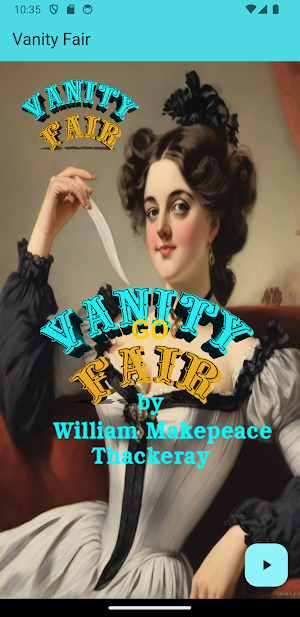
Vanity Fair, penned by the English author William Makepeace Thackeray, is a literary masterpiece that transports readers to the tumultuous era of the Napoleonic Wars. Set against this historical backdrop, the novel weaves a captivating tapestry of characters, ambitions, and societal machinations.
At its heart are two contrasting women: Becky Sharp and Amelia Sedley. Becky, with her sharp wit and unyielding determination, carves her path through Regency society, leaving an indelible mark. Meanwhile, Amelia embodies innocence and vulnerability, navigating the same world with a different set of challenges.
Thackeray's brush strokes paint a panoramic portrait of the age, capturing not only the glittering ballrooms and grand estates but also the grittier realities of war, money, and national identity. The battle for social success rages as fiercely as the infamous Battle of Waterloo, and the casualties—both literal and metaphorical—are equally profound.
The novel's title draws inspiration from John Bunyan's Pilgrim's Progress, a Dissenter allegory published in 1678. In Bunyan's work, "Vanity Fair" symbolizes a ceaseless fair held in a town called Vanity—a place where humanity's sinful attachment to worldly things is laid bare. Thackeray deftly appropriates this imagery, using it to satirize the conventions of early 19th-century British society.
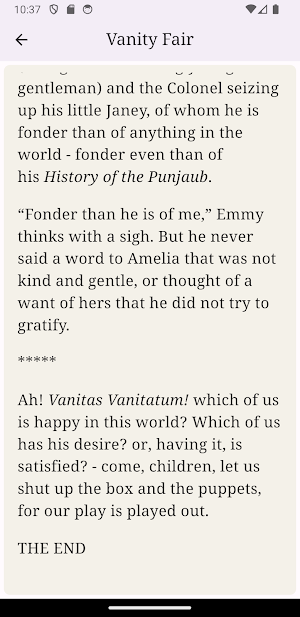
As readers delve into the pages of Vanity Fair, they encounter a rich tapestry of human foibles, desires, and contradictions. Thackeray's narrative voice, framed as a puppet play, adds an intriguing layer of unreliability. The novel's serialized format, accompanied by Thackeray's own illustrations, further enhances the reader's immersion.
Published initially as a 19-volume monthly serial from 1847 to 1848, Vanity Fair eventually emerged as a single-volume work in 1848. Its subtitle, "A Novel without a Hero," reflects Thackeray's deliberate departure from conventional notions of literary heroism. Instead, he dissects the complexities of human nature, revealing flaws and virtues alike.
Vanity Fair stands as a cornerstone of Victorian domestic fiction, influencing subsequent generations of writers. Its enduring appeal has sparked numerous adaptations across different media, from audio renditions to film and television.
In the annals of literature, Thackeray's creation remains a vivid tableau—a mirror reflecting our vanities, aspirations, and the intricate dance of life.
An offline reading book
Similar Apps
Heaven photo frames
New Features:- Change background to new heaven pics background.- Add spiral neon...

Broken Glass Photo Editor
Have fun with Photo Effect editor for Pictures. This photo app offers...
The Haunted House
An offline English novel book: The Haunted House is a tale penned...
Tess of the d'Urbervilles
When discussing classic literature, one name that often comes up is Thomas...
Some Do Not
Some Do Not by Ford Madox Ford is a novel that delves...
No More Parades
"No More Parades" by Ford Madox Ford is a novel that delves...
