Strike Lab: Options Strategies
Indian options lab: payoff charts, Greeks, 48 strategies. No login.
About Strike Lab: Options Strategies
Strike Lab is a laboratory for Indian options strategies. Build a position by hand, drag the spot, the days to expiry, the implied volatility and the strikes themselves, and watch the payoff and the Greeks respond as you move them.
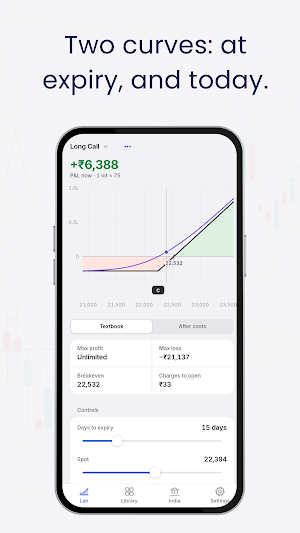
Two curves, always: the payoff at expiry that the textbooks draw, and the theoretical value today, which is what you actually experience. The gap between them is where most confusion about options lives.
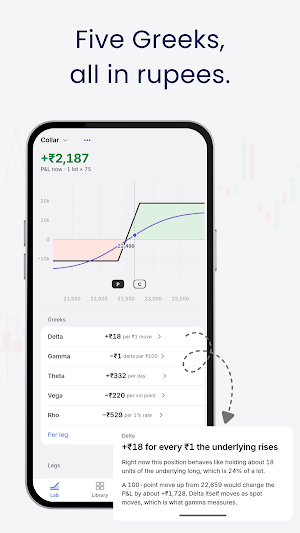
Every number is in rupees for the actual lot, never per share. Every Greek is tappable and explains itself for the position on screen: what tomorrow costs, what a three-point fall in IV does, how delta shifts on a hundred- point move.
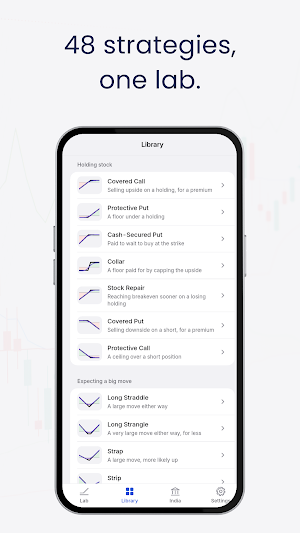
The library carries 48 structures, from a long call to a broken-wing butterfly, each with the same eight sections: the shape, what you are saying, construction, the numbers, the Greeks profile, what kills this trade, the cost reality after Indian charges, and the neighbours it turns into when you move a leg.
The India layer covers what global options content leaves out: lot sizes and strike steps, weekly and monthly expiry, cash versus physical settlement, the STT trap on an in-the-money expiry, the full charge stack on every leg, margin in concept, and ban periods.
What the numbers say: SEBI's own figures on what happens to individual traders in this segment, presented plainly.
In English, हिन्दी and தமிழ்.
No login. No market data. No tips, no signals, no view on any security. Illustrative numbers only; nothing here is a recommendation.
Free: the simulator with all four controls, both curves and the full Greeks panel, fifteen core structures, the whole India layer. The free version shows ads. Strike Lab Pro, one payment: no ads, the full library of 48, and side-by-side comparison of two structures.
