

Paykeep: Budget by Paycheck
Ruth McCarthy Finance iPhoneiPadiPod touch
Paykeep: Budget by Paycheck is a free Finance app for iPhone and iPad by Ruth McCarthy. Requires iOS 15.0. Updated September 3, 2026.
- Price
- Free
- on the App Store
- Size
- 40 MB
- Age 4+
- Updated
- Sep 3
- 2026 · v1.0.2
Screenshots

About Paykeep: Budget by Paycheck
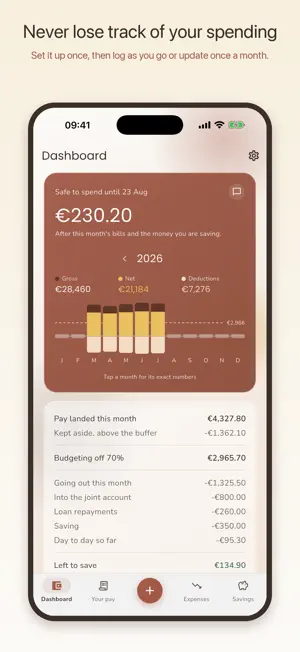
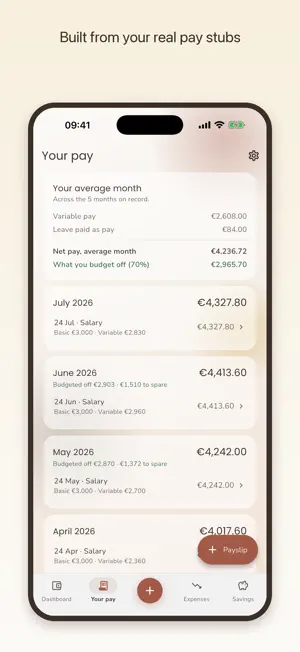
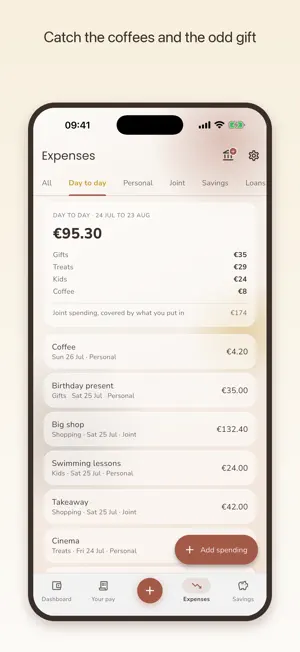
Paykeep gives you two numbers that matter: what is safe to spend this month, and what is still to come out of your accounts. Both are calculated from your real pay stubs, not a hopeful guess. Tap in each pay stub as it arrives. Paykeep averages what your months really paid and helps you budget off a steady share of that, say 70%. It deliberately expects less than your average, so a surprise can only ever be a good one. A steady salary gets the same honest plan, and pay that moves around, overtime, tips, shift differentials, invoices, is exactly what the math was built for. Your month runs payday to payday, and every bill knows its day. At any moment you can see what has already gone out, what is still to come, and what that leaves you. WHAT IT DOES - One steady number to live on: everything above it is a bonus - Always know what has come out this month, and what is still to pay - Months run payday to payday, so the bills reset the day you are paid - Optional weekend and bank holiday rule: pay that is due on a Saturday arrives the working day before, and bills leave the working day after, the way your bank really moves money - Pay stubs pre-fill from the last one: entry is a check, not a chore - Variable bills like groceries and electricity learn from what they actually cost - Bills sit on the accounts they leave from, and a shared joint account is tracked without touching your own totals - Group yearly expenses like tax, insurance and the service into one savings pot with one monthly amount, and the pot pays each bill when it lands - Savings pots and loans on honest bars: the goal, the plan, and the truth - A plain-words summary that reads your month back to you SET UP ONCE Ten or fifteen minutes, one sitting: your last few pay stubs, the bills, any loans, your savings. After that, about two minutes a month. PRIVATE BY DESIGN No account, no server, no analytics. Your figures stay on your phone and in your own iCloud, and nowhere else. Paykeep cannot see your pay. ONE MONTH FREE Every plan starts with one month free: time to add as many pay stubs as you like, old ones included, and live with the prediction. After the trial, Paykeep Pro keeps the app working for 2.99 a month or 24.99 a year, cancel any time. Without Pro everything you entered stays safely visible, read-only. Paykeep is a planning tool, not financial advice. Every figure is an estimate built from your own pay stubs. Terms of use: https://www.apple.com/legal/internet-services/itunes/dev/stdeula/ Privacy: https://brambleapps.com/paykeep/privacy-policy.html
What’s new
Version 1.0.2 · Updated September 3, 2026
New: leave a rating from Settings, straight to the App Store. Small fixes.
App privacy
The developer, Ruth McCarthy, reported these privacy practices to Apple.
Data Not Linked to You
The following data, which may be collected but is not linked to your identity, may be used for the following purposes:
- Purchases: Purchase History
- User Content: Customer Support
Used for: App Functionality
Alternatives to Paykeep: Budget by Paycheck
Looking for apps like Paykeep: Budget by Paycheck? Here are 6 similar apps on the App Store. The highest rated is Palmo: Paycheck Budget Tracker (5.0/5), and 5 of the 6 are free to download.
-
 Kiroku: Budget & Money Tracker
-
 Expense Tracker: Daily Money
-
 Cadence Paycheck Planner
-
 Palmo: Paycheck Budget Tracker
5.0
-
 PayOffly: Debt Payoff Planner
-
 Paymnt: Cash Flow by Paycheck
| App | Rating | Price | Last updated | Compare |
|---|---|---|---|---|
| Paykeep: Budget by Paycheck | – | Free | September 3, 2026 | |
| Kiroku: Budget & Money Tracker | – | Free | Oct 17, 2026 | Compare |
| Expense Tracker: Daily Money | – | Free | Sep 21, 2026 | Compare |
| Cadence Paycheck Planner | – | Free | Apr 8, 2026 | Compare |
| Palmo: Paycheck Budget Tracker | 5.0 / 5 (2) | Free | Jul 15, 2026 | Compare |
| PayOffly: Debt Payoff Planner | – | Free | Oct 13, 2026 | Compare |
| Paymnt: Cash Flow by Paycheck | – | 0.99 USD | Sep 11, 2026 | Compare |