

Shipibo Dictionary
Earth Connection Community Education iPhoneiPadiPod touch
Shipibo Dictionary is a paid Education app for iPhone and iPad by Earth Connection Community. Requires iOS 18.0. Updated March 6, 2026.
- Price
- 29.99 USD
- on the App Store
- Size
- 7 MB
- Age 4+
- Updated
- Mar 6
- 2026 · v1.0
Screenshots
About Shipibo Dictionary
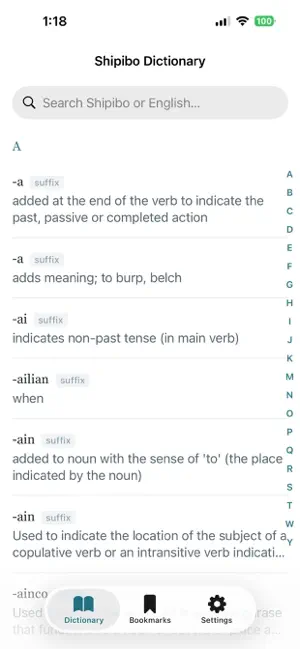
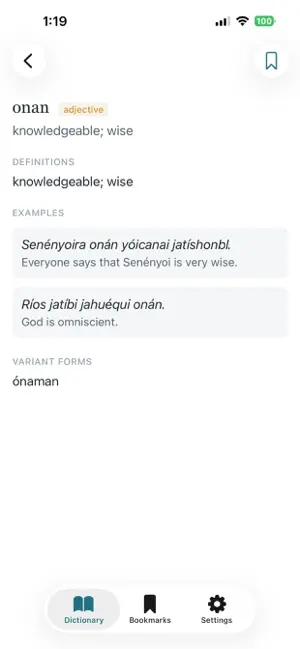
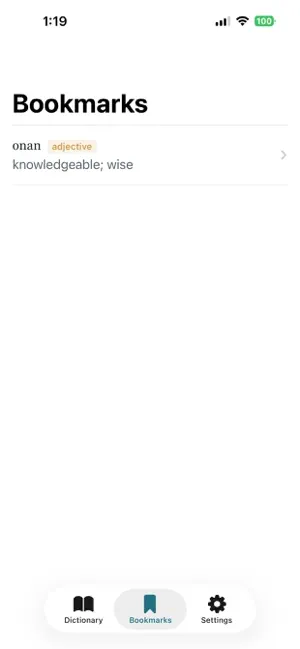
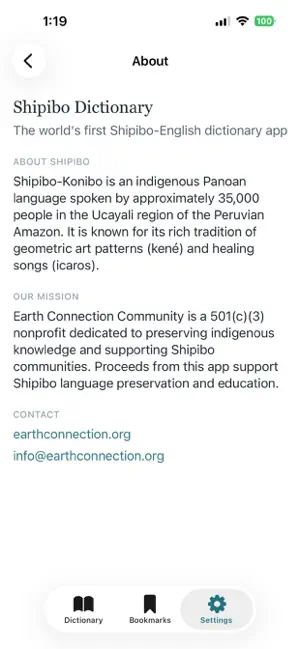
Shipibo Dictionary is the first and most comprehensive Shipibo-English dictionary ever created. With 4,290 entries, this app is an essential tool for anyone learning the Shipibo-Konibo language or studying the culture of the Peruvian Amazon. Shipibo-Konibo is an indigenous Panoan language spoken by approximately 35,000 people in the Ucayali region of Peru. The Shipibo people are known for their intricate geometric art patterns (kené) and their tradition of sacred healing songs (icaros). FEATURES - 4,290 dictionary entries with English and Spanish definitions - Search in Shipibo or English - Bookmark words for quick reference - Example sentences with translations - Grammatical notes, variant forms, and etymologies - Works completely offline — no internet required - Supports Dynamic Type for accessibility Built by Earth Connection Community, a 501(c)(3) nonprofit. Proceeds support Shipibo language preservation and indigenous communities in the Peruvian Amazon.
App privacy
The developer, Earth Connection Community, reported these privacy practices to Apple.
Data Not Collected
The developer does not collect any data from this app.
Alternatives to Shipibo Dictionary
Looking for apps like Shipibo Dictionary? Here are 6 similar apps on the App Store. The highest rated is Evolutionary Herbalism (3.9/5), and all 6 are free to download.
-
 5001 Words
-
 Ngarinyin Welcome
-
 Okuyo: Learn Turkish Reading
-
 Breathless Training
-
 Uzbek Dictionary - Dict Box
-
 Evolutionary Herbalism
3.9
| App | Rating | Price | Last updated | Compare |
|---|---|---|---|---|
| Shipibo Dictionary | – | 29.99 USD | March 6, 2026 | |
| 5001 Words | – | Free | Sep 16, 2026 | Compare |
| Ngarinyin Welcome | – | Free | May 29, 2026 | Compare |
| Okuyo: Learn Turkish Reading | – | Free | Oct 26, 2026 | Compare |
| Breathless Training | – | Free | Dec 17, 2025 | Compare |
| Uzbek Dictionary - Dict Box | – | Free | Jun 26, 2026 | Compare |
| Evolutionary Herbalism | 3.9 / 5 (15) | Free | Aug 10, 2026 | Compare |
Compare Shipibo Dictionary with the top alternatives: ratings, updates, ASO score and keyword gaps →