

Rumi Breathing
Studio Next Ltd Health & Fitness iPhoneiPadiPod touch
Rumi Breathing is a free Health & Fitness app for iPhone and iPad by Studio Next Ltd. Requires iOS 17.0. Updated March 11, 2026.
- Price
- Free
- on the App Store
- Size
- 18 MB
- Age 4+
- Updated
- Mar 11
- 2026 · v1.4
Screenshots


About Rumi Breathing
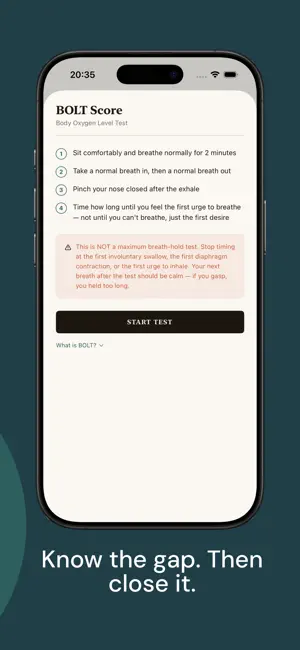
Most people breathe 25,000 times a day. Almost all of them wrong. Rumi Breathing is a science-based practice companion built on James Nestor's landmark research into nasal breathing, CO₂ tolerance, and the lost art of breathing well. BREATHE Guided patterns — Resonance, Coherent, Box, 4-7-8, and more. Breathing at 5.5 breaths per minute synchronises your heart rate variability to its resonance frequency. The effect on HRV, blood pressure, and anxiety is measurable within a single session. LEARN A science library built from Nestor's research: nitric oxide, the Bohr Effect, the Stanford experiment, and the mouth-breathing epidemic reshaping modern skulls. TRAIN Daily exercises and multi-day programs: Nose Unblocking, CO₂ Tolerance, Mouth Tape, and Breath Awareness. MEASURE The BOLT Score reveals your CO₂ tolerance — the single most predictive measure of breathing efficiency. Track it over time. Your nose is a pharmacy. Start using it.
What’s new
Version 1.4 · Updated March 11, 2026
Structural fixes and pivot to the breathing aspect
App privacy
The developer, Studio Next Ltd, reported these privacy practices to Apple.
Data Not Collected
The developer does not collect any data from this app.
Alternatives to Rumi Breathing
Looking for apps like Rumi Breathing? Here are 6 similar apps on the App Store. The highest rated is BreathnFlow (5.0/5), and all 6 are free to download.


| App | Rating | Price | Last updated | Compare |
|---|---|---|---|---|
| Rumi Breathing | – | Free | March 11, 2026 | |
| Montare Alumni | – | Free | Oct 22, 2026 | Compare |
| BreathnFlow | 5.0 / 5 (1) | Free | Mar 10, 2026 | Compare |
| Run With Me - Your Run Crew | 5.0 / 5 (6) | Free | May 22, 2026 | Compare |
| Hunger Timer | – | Free | Feb 10, 2026 | Compare |
| Airia | – | Free | Nov 14, 2025 | Compare |
| Aluma Breath | – | Free | Oct 22, 2026 | Compare |
Compare Rumi Breathing with the top alternatives: ratings, updates, ASO score and keyword gaps →