

Inflatio
Marco Tini Finance iPhoneiPadiPod touch
Inflatio is a paid Finance app for iPhone and iPad by Marco Tini. Rated 5.0/5 from 1 ratings. Requires iOS 16.0. Updated July 9, 2026.
- Rating
- 5.0
- 1 ratings
- Price
- 4.99 USD
- on the App Store
- Size
- 1 MB
- Age 4+
- Updated
- Jul 9
- 2026 · v1.0.3
Screenshots
About Inflatio
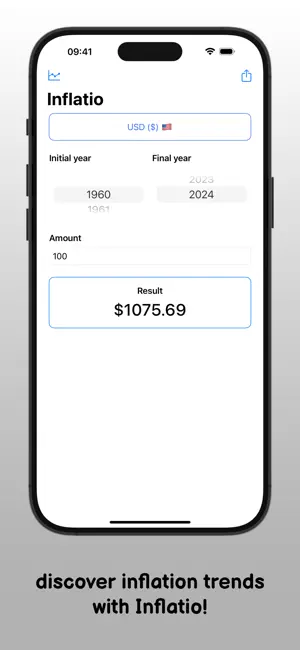
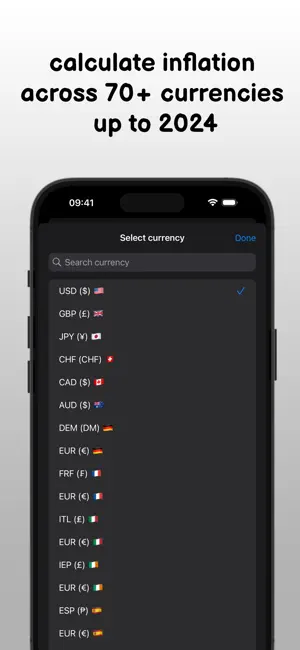
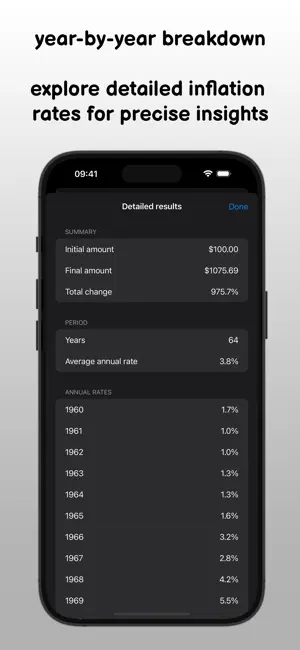
The name Inflatio comes from Latin, meaning "to blow into" or "to inflate," symbolizing the rise in prices and the value of money over time. With this app, you can explore the impact of inflation on over 70 currencies up to 2024, with detailed year-by-year breakdowns and seamless sharing options. Key features: - Comprehensive data: access inflation trends for 70+ currencies worldwide, including USD, EUR, GBP, and more - Year-by-year breakdown: explore inflation rates year by year for accurate insights - Intuitive calculations: see how inflation impacts the value of money over time - Shareable results: easily share insights and comparisons with others Who is this app for? Perfect for economists, students, financial planners, and anyone curious about how inflation affects the world around us. Gain a deeper understanding of global economies and the value of money. Download Inflatio today and uncover the trends shaping our financial history!
What’s new
Version 1.0.3 · Updated July 9, 2026
Bug fixes and performance improvements
App privacy
The developer, Marco Tini, reported these privacy practices to Apple.
Data Not Collected
The developer does not collect any data from this app.
Alternatives to Inflatio
Looking for apps like Inflatio? Here are 6 similar apps on the App Store. The highest rated is SubBill - Subscription Bill (5.0/5), and 5 of the 6 are free to download.
-
 ReceiptVault: Receipt Manager
-
 Crypto SIP Calculator
-
 Subscription Manager - Track
-
 SubBill - Subscription Bill
5.0
SubBill - Subscription Bill
5.0
-
 Trezzi - Deposit Manager
3.0
Trezzi - Deposit Manager
3.0
-
 Cashbook-Daily expense tracker
| App | Rating | Price | Last updated | Compare |
|---|---|---|---|---|
| Inflatio | 5.0 / 5 (1 rating) | 4.99 USD | July 9, 2026 | |
| ReceiptVault: Receipt Manager | – | Free | Jul 29, 2026 | Compare |
| Crypto SIP Calculator | – | Free | Feb 10, 2026 | Compare |
| Subscription Manager - Track | – | Free | Jul 24, 2026 | Compare |
| SubBill - Subscription Bill | 5.0 / 5 (1) | Free | May 2, 2026 | Compare |
| Trezzi - Deposit Manager | 3.0 / 5 (2) | Free | Aug 23, 2026 | Compare |
| Cashbook-Daily expense tracker | – | 1.99 USD | Oct 10, 2026 | Compare |
Compare Inflatio with the top alternatives: ratings, updates, ASO score and keyword gaps →