

Boku: A Private Journal
Claudio Vallejo Productivity iPhoneiPadiPod touch
Boku: A Private Journal is a free Productivity app for iPhone and iPad by Claudio Vallejo. Rated 5.0/5 from 1 ratings. Requires iOS 18.1.
- Rating
- 5.0
- 1 ratings
- Price
- Free
- on the App Store
- Size
- 1 MB
- Age 4+
- Updated
- Dec 2
- 2024 · v1.1.0
Screenshots


About Boku: A Private Journal
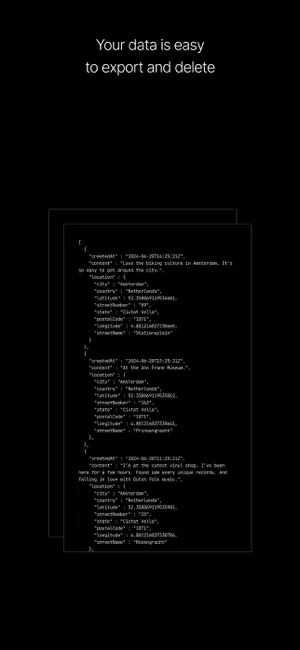
Boku is a private, short-form digital journal. It's a journal designed to capture your thoughts while you're on the go. You can enrich your thoughts by autosaving your location to help you remember where you were. Your data is stored on your device and only you can see your data. Boku has no trackers, cookies, monitors or systems to access or see your data. Because your data is private, Boku makes it easy to export your data and delete your data at any time. The inspiration for Boku comes from the Japanese word 僕 or boku, which means "I" or "me" and also "private" or "personal".
What’s new
Version 1.1.0 · Updated December 2, 2024
This version fixes 3 bugs: (1) Fixes the "Autosave location" button to work with dark/light display modes (2) Fixes the date in the thought list to show correct date format (3) Fixes the new thought screen to prevent thoughts with no text from being created
App privacy
The developer, Claudio Vallejo, reported these privacy practices to Apple.
Data Not Collected
The developer does not collect any data from this app.
Alternatives to Boku: A Private Journal
Looking for apps like Boku: A Private Journal? Here are 6 similar apps on the App Store. The highest rated is JournalWrite: Journal & Stats (5.0/5), and all 6 are free to download.
-
 WhenWhereWhatTodo
-
 RunMemo
-
 JournalWrite: Journal & Stats
5.0
-
 Class Schedule: Timetable Pad
5.0
-
 Loata: AI Notes & File Search
-
 Burn Journal
5.0
| App | Rating | Price | Last updated | Compare |
|---|---|---|---|---|
| Boku: A Private Journal | 5.0 / 5 (1 rating) | Free | December 2, 2024 | |
| WhenWhereWhatTodo | – | Free | Jun 2, 2026 | Compare |
| RunMemo | – | Free | Mar 7, 2026 | Compare |
| JournalWrite: Journal & Stats | 5.0 / 5 (3) | Free | Aug 6, 2026 | Compare |
| Class Schedule: Timetable Pad | 5.0 / 5 (1) | Free | Sep 10, 2026 | Compare |
| Loata: AI Notes & File Search | – | Free | Sep 8, 2025 | Compare |
| Burn Journal | 5.0 / 5 (1) | Free | May 8, 2026 | Compare |