

Pingua: Vocabulary Trainer
Setfree Teknoloji Bilişim San. ve Tic. Ltd. Şti. Education iPhoneiPadiPod touch
Pingua: Vocabulary Trainer is a free Education app for iPhone and iPad by Setfree Teknoloji Bilişim San. ve Tic. Ltd. Şti. Rated 5.0/5 from 1 ratings.
- Rating
- 5.0
- 1 ratings
- Price
- Free
- on the App Store
- Size
- 109 MB
- Age 12+
- Updated
- Sep 28
- 2026 · v1.0.11
Screenshots

About Pingua: Vocabulary Trainer
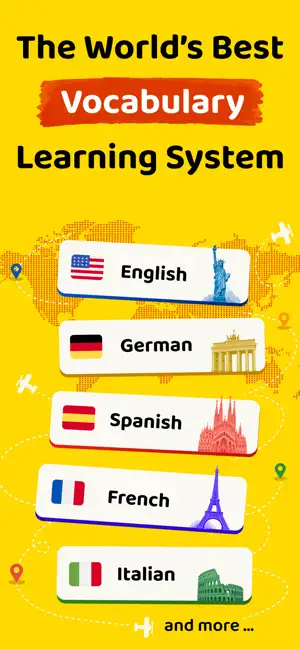
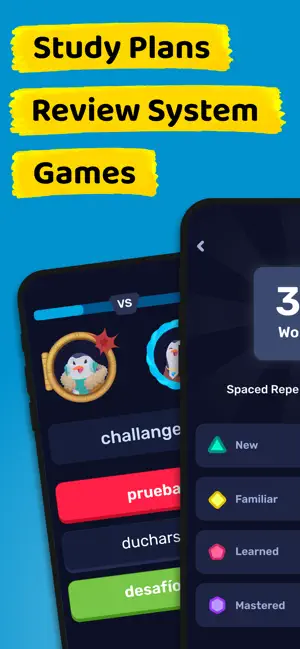
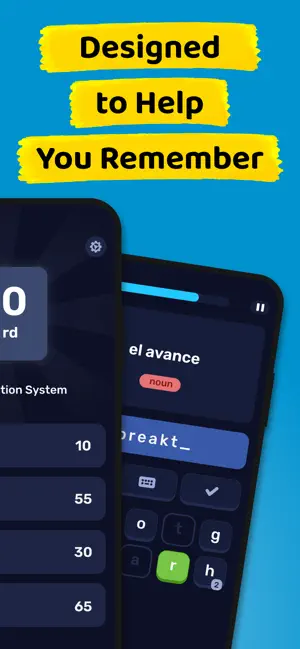
Build your vocabulary with short, focused practice that fits into your day. Pingua helps you learn new words, review what you’ve seen, and practice through word games that keep learning active. Pingua is a vocabulary learning app for people who want to improve their word knowledge without long, heavy lessons. Practice for a few minutes a day, return to words you already studied, check meanings in the dictionary, and track your progress through clear word levels. Learn words in 9 languages Pingua supports vocabulary practice in German, English, Latin American Spanish, Spain Spanish, French, Italian, Dutch, Brazilian Portuguese, and Turkish. Choose the language you want to practice and build your vocabulary step by step with a simple routine. Word learning and review Seeing a word once is often not enough to remember it over time. That’s why Pingua combines word learning with a review system. You can revisit previous words, refresh your memory, and spend more time on the words that still need practice. Each word can move through four levels: New Medium Good Perfect These levels help you understand which words are new, which are becoming familiar, and which ones you remember with more confidence. Instead of reviewing everything at random, you can focus your time more clearly. For English learners If you’re learning English, Pingua includes dedicated sections for phrasal verbs, collocations, and irregular verbs. These sections are made specifically for English learning. They help you recognize common expressions, useful word combinations, important patterns, and irregular verb forms. They are not presented as general features for every language. Motivation with streak, combo, and rewards Consistency matters when learning a language. Pingua makes your routine visible with a streak, adds energy with combo for correct answers in a row, and shows your progress through diamonds, EXP, and badges. The gamified experience is designed to motivate practice without making unrealistic promises. Dictionary and word levels The dictionary helps you quickly check the meaning of the words you practice. Together with the New, Medium, Good, and Perfect levels, it gives you a clearer view of what you know and what may be worth reviewing again. Word games for active practice Pingua turns review into a more active experience with word games. Learning does not have to mean reading long lists only; you can switch between short, varied, and motivating practice modes. Word Duel tests your reaction speed and vocabulary. Flag Battle adds a visual and dynamic element to practice. Timed Word Matching challenges you to match words as fast as possible and improve your personal record. These games help reinforce words you have already seen, keep your focus, and bring variety to your routine. Even short sessions can feel more purposeful when each one has a clear goal. Who is Pingua for? Pingua is useful for students, self-learners, beginners starting a new language, English learners, and anyone who prefers short, frequent practice over long occasional study sessions. The app can also support vocabulary building for school, work, travel, tests, ESL practice, or personal goals. Start with Pingua and build your own routine: learn new words, review with intention, practice through games, and follow your progress step by step. Pingua is designed to be easy to open whenever you have a few free minutes. Use it at home, during a break, on the go, or anytime you want to keep a language fresh without starting a long lesson. Privacy Policy: https://pingua.app/en/privacy User Agreement: https://pingua.app/en/term
What’s new
Version 1.0.11 · Updated September 28, 2026
We’ve made performance improvements and fixed bugs to make your app experience smoother and more reliable.
App privacy
The developer, Setfree Teknoloji Bilişim San. ve Tic. Ltd. Şti., reported these privacy practices to Apple.
Data Used to Track You
The following data may be used to track you across apps and websites owned by other companies:
- Purchases: Purchase History
- Contact Info: Email Address
- User Content: Customer Support
- Identifiers: User ID, Device ID
- Usage Data: Product Interaction, Advertising Data
- Diagnostics: Crash Data, Performance Data, Other Diagnostic Data
Data Linked to You
The following data, which may be collected and linked to your identity, may be used for the following purposes:
- Purchases: Purchase History
- Identifiers: User ID, Device ID
- Usage Data: Product Interaction
- Diagnostics: Crash Data, Other Diagnostic Data
- Contact Info: Email Address, Name
- User Content: Customer Support
Used for: Third-Party Advertising, Analytics, App Functionality
Data Not Linked to You
The following data, which may be collected but is not linked to your identity, may be used for the following purposes:
- Contact Info: Email Address, Name
- Diagnostics: Performance Data
- Usage Data: Advertising Data
Used for: Third-Party Advertising, Analytics, App Functionality
Alternatives to Pingua: Vocabulary Trainer
Looking for apps like Pingua: Vocabulary Trainer? Here are 6 similar apps on the App Store. The highest rated is Gyrus: Brain & Logic Training (4.8/5), and all 6 are free to download.
-
 Congregation Shema Yisrael
3.0
-
 Learn English US for Beginners
4.7
-
 Gyrus: Brain & Logic Training
4.8
-
 Epop: Learn Real-Life English
4.7
-
 Wlingua - Learn English
4.8
-
 Language Reactor - Sounter
4.8
| App | Rating | Price | Last updated | Compare |
|---|---|---|---|---|
| Pingua: Vocabulary Trainer | 5.0 / 5 (1 rating) | Free | September 28, 2026 | |
| Congregation Shema Yisrael | 3.0 / 5 (2) | Free | Jun 4, 2026 | Compare |
| Learn English US for Beginners | 4.7 / 5 (1,261) | Free | Jun 10, 2026 | Compare |
| Gyrus: Brain & Logic Training | 4.8 / 5 (58) | Free | Feb 15, 2026 | Compare |
| Epop: Learn Real-Life English | 4.7 / 5 (2,370) | Free | Oct 14, 2026 | Compare |
| Wlingua - Learn English | 4.8 / 5 (8,111) | Free | Oct 15, 2026 | Compare |
| Language Reactor - Sounter | 4.8 / 5 (3,828) | Free | Jun 18, 2026 | Compare |