Chikanda Orchid Key
A non-botanist’s key to identifying Zambian orchids harvested for Chikanda
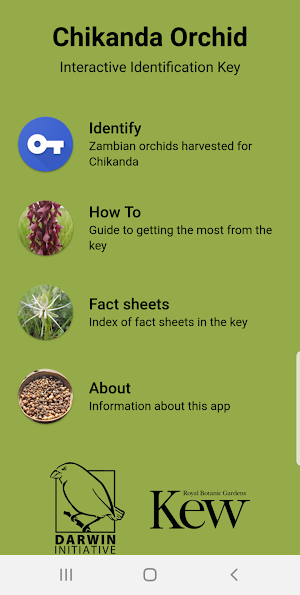
About Chikanda Orchid Key
Chikanda is a local foodstuff from northern Zambia and surrounding countries. It is made from pounded groundnuts and the tubers of a number of orchid species, namely Disa, Habenaria and Satyrium though other genera are also used. Harvesting of the orchids is widespread in Zambia and the surrounding countries from wild populations in the dambos (wet/dry grasslands) and woodlands at an unsustainable level peaking fears of possible extinction.
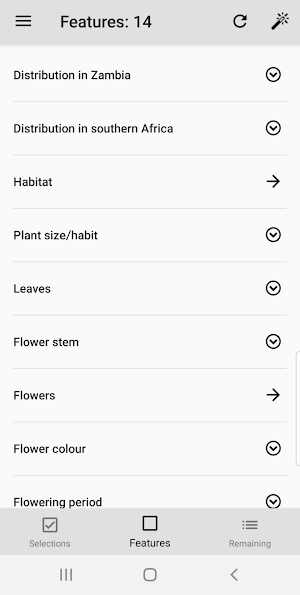
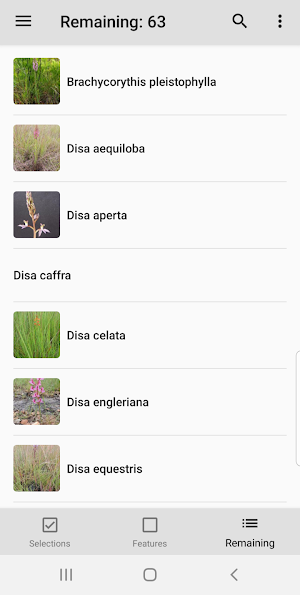
This key is meant for non-botanists and employs the analysis of various features of the plant(s) and its habitat to help narrow down the choice of species. As a result, it is not an exact key and will not necessarily narrow down the choices to the particular species but rather to a choice of a few of the most likely species. If any user has any questions, comments or suggestions for the key, please don’t hesitate to contact us.
Authors
Key created by Nicholas Wightman and Ruth Bone, under Darwin Initiative Project 23034
Software used
Lucid v3.6 was used to build the key, and Fact Sheet Fusion v2 was used to manage the text and images for the fact sheets used in the key. The app was created via the Lucid Mobile Platform.
For more information on these software tools please visit http://www.lucidcentral.org
To submit feedback for this app, or to make a bug report, please visit https://apps.lucidcentral.org/support/
Similar Apps

Palm ID Key
Palm ID Key is designed to help users identify cultivated palms. The...

Aquarium & Pond Plant ID
The worldwide trade in plants for use in aquaria and ponds is...

Rice Doctor Assam EN
Rice Doctor is an interactive crop diagnostic tool for extension workers, students,...

Rice Doctor Assam
ৰাইচ ডাক্তৰ, অসম (Rice Doctor, Assam) হ’ল এটা মবাইল এপ (App) অৰ্থাৎ...
Australian Tropical Ferns
Australian Tropical Ferns and Lycophytes is a fern and lycophyte identification and...
Key important fruit flies EU
The key contains characters to differentiate between adults of 23 fruit fly...
