Field of View Calculator
Field of View Calculator for Infrared Radiometers from Apogee Instruments
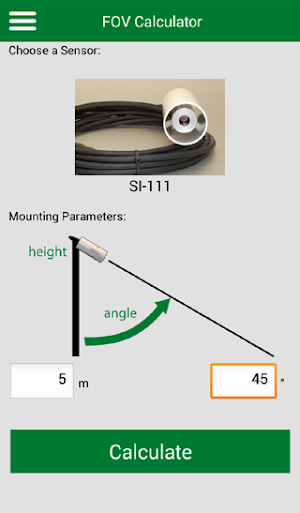

About Field of View Calculator
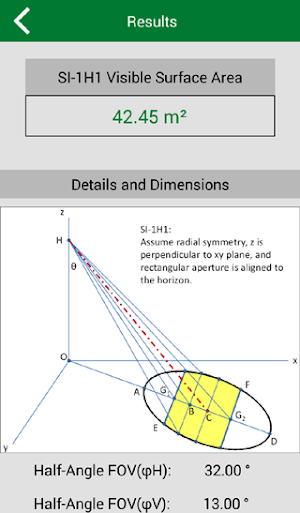
One of the most important steps in using an infrared radiometer from Apogee instruments is determining the exact field of view of the sensor during installation. The mounting geometry (distance from target surface, angle of orientation relative to target surface) is determined by the desired area of surface to be measured. The field of view extends unbroken from the sensor to the target surface. Sensors must be carefully mounted in order to view the desired target and avoid including unwanted surfaces/objects in the field of view, thereby averaging unwanted temperatures with the target temperature.
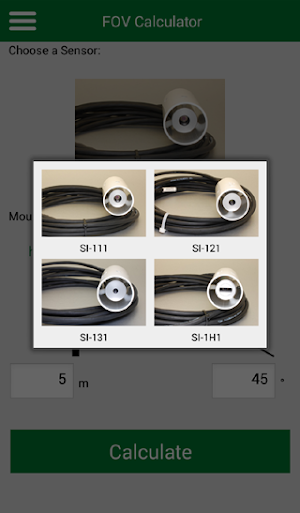
The FOV Calculator makes this process simple. To use the calculator, simply enter your IRR viewing height (H), viewing angle (θ, relative to nadir view = 0°), chose your sensor model, then click calculate.
General Information: All objects with a temperature above absolute zero emit electromagnetic radiation. The wavelengths and intensity of radiation emitted are related to the temperature of the object. Terrestrial surfaces (e.g., soil, plant canopies, water, snow) emit radiation in the mid infrared portion of the electromagnetic spectrum (approximately 4-50 µm).
Infrared radiometers are sensors that measure infrared radiation, which is used to determine surface temperature without touching the surface (when using sensors that must be in contact with the surface, it can be difficult to maintain thermal equilibrium without altering surface temperature). Infrared radiometers are often called infrared thermometers because temperature is the desired quantity, even though the sensors detect radiation.
Typical applications of infrared radiometers include plant canopy temperature measurement for use in plant water status estimation, road surface temperature measurement for determination of icing conditions, and terrestrial surface (soil, vegetation, water, snow) temperature measurement in energy balance studies.
Apogee Instruments SI series infrared radiometers consist of a thermopile detector, germanium filter, precision thermistor (for detector reference temperature measurement), and signal processing circuitry mounted in an anodized aluminum housing, and a cable to connect the sensor to a measurement device. All radiometers also come with a radiation shield designed to minimize absorbed solar radiation, but still allowing natural ventilation. The radiation shield insulates the radiometer from rapid temperature changes and keeps the temperature of the radiometer closer to the target temperature.
Sensors are potted solid with no internal air space and are designed for continuous temperature measurement of terrestrial surfaces in indoor and outdoor environments. SI-100 series sensors output an analog voltage that is directly proportional to the infrared radiation balance of the target (surface or object the sensor is pointed at) and detector, where the radiation balance between target and detector is related to the temperature difference between the two.
For more information visit http://www.apogeeinstruments.com/infraredradiometer/
Similar Apps

Depth Seekers
In today’s world, a lot of us understand the value of inner-work....
WeHunt
In WeHunt you will find everything you possibly need in your hunt....

Dashboard Air - Speedometer
Improve your vehicles, bikes, airplanes, boats, bicycles.* ADI - Attitude Direction Indicator*...

Good To Stargaze
When will it be good to stargaze? See the weather forecast, ...
SCP Anywhere Reader
Read about anomalous and mysterious events, locations and beings from the SCP...

MyRadar Weather Radar Pro
** MyRadar Ad Free does not sell user data to any third...
