

Clear Sky Calculator
Apogee Instruments Business
Estimates global solar radiation to determine the need for sensor recalibration
- Downloads
- 6K+
- on Google Play
- Price
- Free
- No in-app purchases
- Updated
- Jul 16
- 2025 · v2.8.1
Screenshots


About Clear Sky Calculator
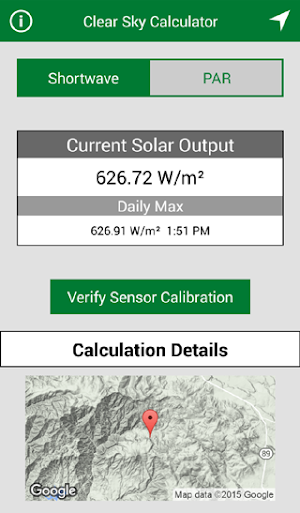
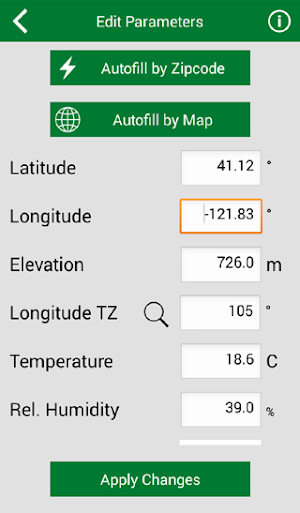
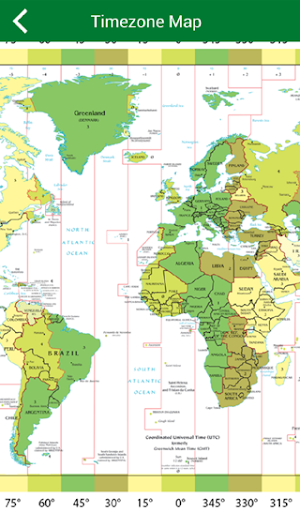
The Clear Sky Calculator is used to determine the need for recalibration of radiation sensors. It is most accurate when used near solar noon in the summer months. The calculator estimates the intensity of solar radiation (either total global shortwave radiation, measured by pyranometers, or global photosynthetic photon flux density, measured by quantum sensors) incident on a horizontal surface at any time of the day, at any location in the world. The equations used to estimate clear sky solar radiation with the Clear Sky Calculator come from the clear sky solar radiation model used to calculate net radiation in the ASCE Standardized Reference Evapotranspiration Equation (http://www.kimberly.uidaho.edu/water/asceewri/index.html). The only input requirements to the calculator are site elevation, latitude, longitude, reference longitude, and air temperature and relative humidity measurements or estimates. These data are typically easy to obtain, making the Clear Sky Calculator a simple solar radiation reference that can be used to estimate pyranometer and quantum sensor accuracy and determine the need for recalibration.
When used near solar noon over multiple clear, unpolluted days during spring and summer months, accuracy of the Clear Sky Calculator is estimated to be ± 4 % in all climates and locations around the world. As an example, modeled incoming shortwave radiation (SWi) from the Clear Sky Calculator closely tracked measured SWi (data from a heated and ventilated Kipp & Zonen CM21 pyranometer) for a clear day (April 21, 2012) in Logan, Utah. The ratio of measured SWi to modeled SWi was between 1.00 and 1.05 (0 % and 5 %) from 9 AM to 6 PM (solar zenith angles less than 65°). The average ratio from two hours before solar noon to two hours after solar noon was 1.02 ± 0.01 (2 ± 1 %). (see http://www.apogeeinstruments.com/using-the-clear-sky-calculator/ )
A more detailed discussion of Clear Sky Calculator accuracy is given on the webpage (http://clearskycalculator.com/model_accuracy.htm), where the necessary accuracy of the required inputs is discussed.
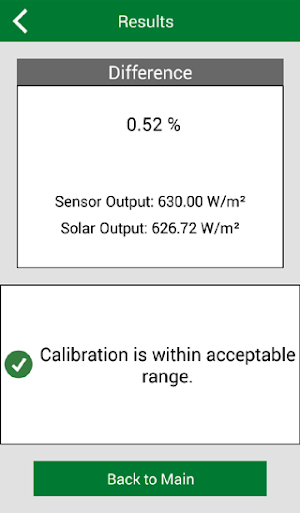
Apogee strongly encourages our customers to use the Clear Sky Calculator as an effective way to monitor pyranometer and quantum sensor performance and determine the need for sensor recalibration. If a sensor is consistently different from the Clear Sky Calculator by more than a few percent, please contact us about recalibration.
What’s new
Version 2.8.1 · Updated July 16, 2025
Update for compatibility with Android 15
Alternatives to Clear Sky Calculator
Looking for apps like Clear Sky Calculator? Here are 4 similar Android apps on Google Play. The highest rated is COLREG 72: safety at sea (5.0/5), and all 4 are free to download.




| App | Rating | Price | Installs | Last updated | Compare |
|---|---|---|---|---|---|
| Clear Sky Calculator | – | Free | 5,000+ | Jul 16, 2025 | |
| FlightLog | 4.0 / 5 | Free | 10,000+ | Oct 28, 2026 | Compare |
| Good To Stargaze | 4.2 / 5 | Free | 50,000+ | Aug 15, 2026 | Compare |
| COLREG 72: safety at sea | 5.0 / 5 | Free | 100,000+ | Oct 24, 2026 | Compare |
| Trail Sense | 4.9 / 5 | Free | 100,000+ | Sep 4, 2026 | Compare |