

Lyrical Video Status Maker-Vid
Benzyl Studios Video Players & Editors Contains ads
Lyrics are words that make up a song, create your photo videos with lyrical song
- Downloads
- 1K+
- on Google Play
- Price
- Free
- No in-app purchases
- Updated
- Sep 7
- 2022 · v1.0.2
Screenshots

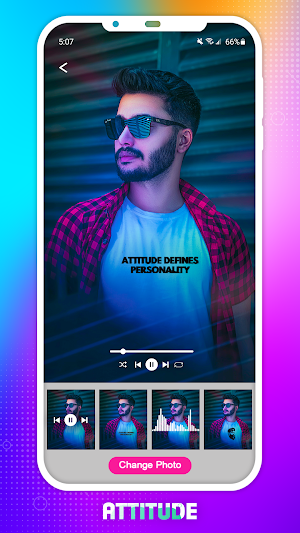

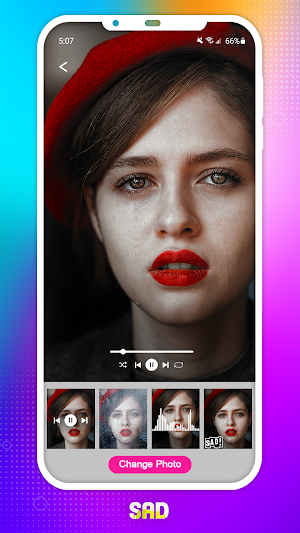


About Lyrical Video Status Maker-Vid
Lyrics are words that make up a song, usually consisting of verses and choruses. The writer of lyrics is a lyricist. The words to an extended musical composition such as an opera are, however, usually known as a "libretto" and their writer, as a "librettist". The meaning of lyrics can either be explicit or implicit. Some lyrics are abstract, almost unintelligible, and in such cases, their explication emphasizes form, articulation meter, and symmetry of expression. Rappers can also create lyrics (often with a variation of rhyming words) that are meant to be spoken rhythmically rather than sung.
The word lyric derives via Latin lyrics from the Greek λυρικός (lurikós), the adjectival form of a lyre. It first appeared in English in the mid-16th century about the Earl of Surrey's translations of Petrarch and his sonnets. Greek lyric poetry had been defined by how it was sung accompanied by the lyre or cithara, as opposed to the chanted formal epics or the more passionate elegies accompanied by the flute.
The personal nature of many of the verses of the Nine Lyric Poets led to the present sense of "lyric poetry" but the original Greek sense of "lyric poetry"—"poetry accompanied by the lyre" i.e. "words set to music"—eventually led to its use as "lyrics", first attested in Stainer and Barrett's 1876 Dictionary of Musical Terms. Stainer and Barrett used the word as a singular substantive: "Lyric, poetry or blank verse intended to be set to music and sung". By the 1930s, the present use of the plurale tantum "lyrics" had begun; it has been standard since the 1950s for many writers. The singular form "lyric" is still used to mean the complete words to a song by authorities such as Alec Wilder, Robert Gottlieb, and Stephen Sondheim. However, the singular form is also commonly used to refer to a specific line (or phrase) within a song's lyrics.
The differences between poem and song may become less meaningful where the verse is set to music, to the point that any distinction becomes untenable. This is perhaps recognized in the way popular songs have lyrics. However, the verse may pre-date its tune (in the way that "Rule Britannia" was set to music, "And did those feet in ancient time" has become the hymn ", or the tune may be lost over time but the words survive, matched by several different tunes (this is particularly common with hymns and ballads).
Possible classifications proliferate (under anthem, ballad, blues, carol, hymn, libretto, lied). the term doesn't imply a distinction. The ghazal is a sung form that is considered primarily poetic. See also rapping, roots of hip hop music. Analogously, verse drama might normally be judged (at its best) as poetry, but not consisting of poems (see dramatic verse).
In Baroque music, melodies and their lyrics were prose. Rather than paired lines, they consist of rhetorical sentences or paragraphs consisting of an opening gesture, an amplification (often featuring sequence), and a close (featuring a cadence); in German Vordersatz-Fortspinnung-Epilog.
Lyrics can be studied from an academic perspective. For example, some lyrics can be considered a form of social commentary. Lyrics often contain political, social, and economic themes—as well as aesthetic elements—and so can communicate culturally significant messages. These messages can be explicit or implied through metaphor or symbolism. Lyrics can also be analyzed concerning the sense of unity (or lack of unity) it has with their supporting music.
Analysis based on tonality and contrast is a particular example. Former Oxford Professor of Poetry Christopher Ricks famously published Dylan's Visions of Sin, an in-depth and characteristically Ricksian analysis of the lyrics of Bob Dylan; Ricks gives the caveat that to have studied the poetry of the lyrics in tandem with the music would have made for a much more complicated critical feat.
What’s new
Version 1.0.2 · Updated September 7, 2022
Bug fixes
Alternatives to Lyrical Video Status Maker-Vid
Looking for apps like Lyrical Video Status Maker-Vid? Here are 6 similar Android apps on Google Play. All of them are free to download.
-
Brand Lead Fest Poster Maker
-
Men Suit - Photo Editor
-
Men Sweatshirt - Photo Suit
-
Men Police Photo Editor - Suit
-
Miniature Effect Art Editor
-
Fire photo editor - Pic Frame
| App | Rating | Price | Installs | Last updated | Compare |
|---|---|---|---|---|---|
| Lyrical Video Status Maker-Vid | – | Free | 1,000+ | Sep 7, 2022 | |
| Brand Lead Fest Poster Maker | – | Free | 10+ | Nov 24, 2022 | Compare |
| Men Suit - Photo Editor | – | Free | 5,000+ | Aug 20, 2022 | Compare |
| Men Sweatshirt - Photo Suit | – | Free | 1,000+ | Aug 17, 2022 | Compare |
| Men Police Photo Editor - Suit | – | Free | 1,000+ | May 6, 2023 | Compare |
| Miniature Effect Art Editor | – | Free | 1,000+ | May 4, 2023 | Compare |
| Fire photo editor - Pic Frame | – | Free | 1,000+ | May 4, 2023 | Compare |
Similar apps on Google Play
- Brand Lead Fest Poster Maker
- Men Suit - Photo Editor
- Men Sweatshirt - Photo Suit
- Men Police Photo Editor - Suit
- Miniature Effect Art Editor
- Fire photo editor - Pic Frame
- Man Formal Shirt – Suit Editor
- Blur Photo Editor & Pic Frames
- Girlfriend Photo Editor -Frame
- City photo editor - Frames
- Photo Editor - Gallery Videos
- Blend Photo Editor - Pic Frame
- Gallery HD With Photo Editor
- Garden Photo Editor and- Frame
- Waterfall photo editor: Frames
- Video Player With Photo Editor