
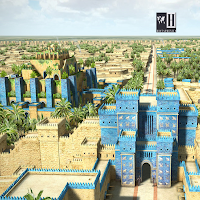
Babylon - History
Books & Reference In-app purchases Contains ads
Babylon
- Downloads
- 1+
- on Google Play
- Price
- Free
- In-app purchases
- Updated
- May 11
- 2024 · v1.0
Screenshots
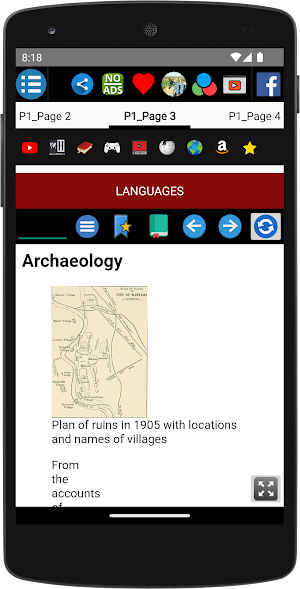


About Babylon - History
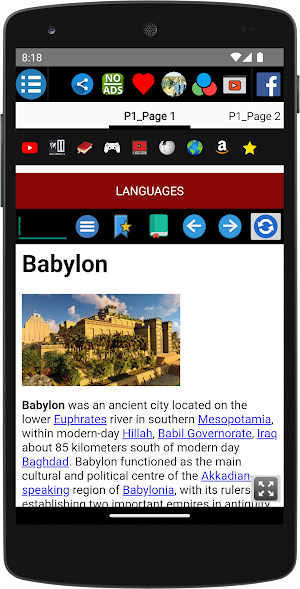
Babylon was an ancient city located on the lower Euphrates river in southern Mesopotamia, within modern-day Hillah, Babil Governorate, Iraq about 85 kilometers south of modern day Baghdad. Babylon functioned as the main cultural and political centre of the Akkadian-speaking region of Babylonia, with its rulers establishing two important empires in antiquity, namely the 19th–16th century BC Old Babylonian Empire and the 7th–6th century BC Neo-Babylonian Empire, and the city would also be used as a regional capital of other empires, such as the Achaemenid Empire. Babylon was one of the most important urban centres of the ancient Near East until its decline during the Hellenistic period. Nearby ancient sites are Kish, Borsippa, Dilbat, and Kutha.
The earliest known mention of Babylon as a small town appears on a clay tablet from the reign of Shar-Kali-Sharri (2217–2193 BC) of the Akkadian Empire. Babylon was merely a religious and cultural centre at this point and neither an independent state nor a large city, subject to the Akkadian Empire. After the collapse of the Akkadian Empire, the south Mesopotamian region was dominated by the Gutian Dynasty for a few decades before the rise of the Third Dynasty of Ur, which encompassed the whole of Mesopotamia, including the town of Babylon.
The town became part of a small independent city-state with the rise of the first Babylonian Empire, now known as the Old Babylonian Empire, in the 19th century BC. The Amorite king Hammurabi founded the short-lived Old Babylonian Empire in the 18th century BC. He built Babylon into a major city and declared himself its king. Southern Mesopotamia became known as Babylonia, and Babylon eclipsed Nippur as the region's holy city. The empire waned under Hammurabi's son Samsu-iluna, and Babylon spent long periods under Assyrian, Kassite and Elamite domination. After the Assyrians had destroyed and then rebuilt it, Babylon became the capital of the short-lived Neo-Babylonian Empire from 626 to 539 BC. The Hanging Gardens of Babylon were ranked as one of the Seven Wonders of the Ancient World, allegedly existing between approximately 600 BC to ~1 AD. However, there are questions about whether the Hanging Gardens of Babylon even existed, as there is no mention within any extant Babylonian texts of its existence. After the fall of the Neo-Babylonian Empire, the city came under the rule of the Achaemenid, Seleucid, Parthian, Roman, Sassanid, and Muslim empires. The last known habitation of the town dates from the 11th century AD, when it was referred to as the "small village of Babel".
It has been estimated that Babylon was the largest city in the world c. 1770 – c. 1670 BC, and again c. 612 – c. 320 BC. It was perhaps the first city to reach a population above 200,000. Estimates for the maximum extent of its area range from 890 to 900 ha (2,200 acres). The main sources of information about Babylon—excavation of the site itself, references in cuneiform texts found elsewhere in Mesopotamia, references in the Bible, descriptions in other classical writing (especially by Herodotus), and second-hand descriptions (citing the work of Ctesias and Berossus)—present an incomplete and sometimes contradictory picture of the ancient city, even at its peak in the sixth century BC. UNESCO inscribed Babylon as a World Heritage Site in 2019. The site receives thousands of visitors each year, almost all of whom are Iraqis. Construction is rapidly increasing, which has caused encroachments on the ruins.
Alternatives to Babylon - History
Looking for apps like Babylon - History? Here are 6 similar Android apps on Google Play. The highest rated is Adolf Hitler - Biography (4.6/5), and all 6 are free to download.
-
History of Afghanistan
-
Retro Classic Games 500 in 1
-
Satanism - History
-
الوتس الأزرق | Guide
-
Israel - Palestine War History
-
Adolf Hitler - Biography 4.6
| App | Rating | Price | Installs | Last updated | Compare |
|---|---|---|---|---|---|
| Babylon - History | – | Free | 1+ | May 11, 2024 | |
| History of Afghanistan | – | Free | 100+ | Oct 28, 2023 | Compare |
| Retro Classic Games 500 in 1 | – | Free | 100+ | Oct 28, 2023 | Compare |
| Satanism - History | – | Free | 500+ | Oct 28, 2023 | Compare |
| الوتس الأزرق | Guide | – | Free | 50+ | Dec 31, 2023 | Compare |
| Israel - Palestine War History | – | Free | 100+ | Nov 25, 2023 | Compare |
| Adolf Hitler - Biography | 4.6 / 5 | Free | 500+ | Oct 28, 2023 | Compare |
Compare Babylon - History with the top alternatives: ratings, updates, ASO score and keyword gaps →
Similar apps on Google Play
- History of Afghanistan
- Retro Classic Games 500 in 1
- Satanism - History
- الوتس الأزرق | Guide
- Israel - Palestine War History
- Adolf Hitler - Biography
- Freemasonry History
- Illuminati History
- Black People History
- History of Guinea-Bissau
- Jewish history
- History of Haiti - Istwa Ayiti
- شات التاج الذهبي
- Roman Empire - History
- History of the USA
- World History
- History of Africa
- History of Ancient Israel
- Internal combustion engine
- Catholic Church - History
- History of Burkina Faso
- Taariikhda Soomaali Galbeed
- Map of Africa
- History of Ancient Egypt
- World War I - History
- Russia - Ukraine War - History
- History of DR Congo
- Oromo History - Seenaa Oromoo
- Slavery - History
- History of Ethiopia/የኢትዮጵያ ታሪክ
- پښتانه پېښليک/Pashtuns History
- History of Angola
- Amhara History / አማራ - ታሪክ
- World War II - History
- Ancient Mesopotamia - History
- History of Israel
- History of Earth
- History of Ancient Greece
- Baloch - History / بلوچ تاریخ
- History of the Congo
- History of Sudan
- Map of DR Congo
- Afghanistan Map/افغانستان نقشه
- Wicca - History
- Magic - History
- Military strategy - History
- Black magic - History
- Nikola Tesla - Biography
- Romeo and Juliet
- Gun - History
- History of Cameroon
- Firearm - History
- Art - History
- History of the Gambia
- Philosophy - History
- Military tactics - History
- Fidel Castro - Biography
- Avicenna Ibn Sina - Biography
- Albert Einstein - Biography
- Maabka Soomaaliya /Somalia Map
- Map of Ethiopia/የኢትዮጵያ ካርታ
- Map of Nigeria
- Babylon - History
- AK-47 - History
- Alexander the Great -Biography
- Sindhis - History/سنڌي - تاريخ
- Balochistan History / بلوچستان
- Abraham Lincoln - Biography
- Aztec - History
- Amhara Region -History/አማራ ክልል
- Anarchism - History
- Amharic History / አማርኛ - ታሪክ
- Oromia History-Seenaa Oromiyaa
- Swastika - History
- Aristotle - Biography
- Socrates - Biography
- Plato - Biography
- Technology - History
- Map of Mali
- Christianity - History
- Odisha History- ଓଡ଼ିଶାର ଇତିହାସ
- French Revolution - History
- Fascism History
- اللوتس عمر اللوردي الاصلي
- Bible - History
- Ancient Rome History
- Ancient History
- Devil - History
- Democracy - History
- Communism - History
- Capitalism - History
- Lionel Messi - Biography
- History of religion
- D-Day History
- Gulf War - History
- Arab–Israel War - History
- History of Zimbabwe
- History of Zambia
- History of Yemen
- The Art of War by Sun Tzu
- Diabetes - History
- HIV/AIDS
- As a Man Thinketh -James Allen
- History of Vietnam
- History of Venezuela
- History of Vatican City
- History of Vanuatu
- History of Uzbekistan
- History of US Virgin Islands
- History of Uruguay
- History of the United Kingdom
- History of Gaza
- History of the UAE
- History of Uganda
- History of Tuvalu
- Turks Caicos Islands - History
- History of Turkmenistan
- History of Turkey
- History of Tunisia
- History of Trinidad and Tobago
- History of Tonga
- History of Togo
- History of Thailand
- History of Tanzania
- History of Tajikistan
- History of Taiwan
- History of Syria
- History of Switzerland
- History of Sweden
- History of Suriname
- History of Sri Lanka
- History of Spain
- History of South Sudan
- History of South Korea
- History of Solomon Islands
- History of Slovenia
- History of Slovakia
- History of Sierra Leone
- History of Seychelles
- History of Serbia
- History of Senegal
- History of Saudi Arabia
- History of San Marino
- History of Saint Lucia
- Saint Kitts and Nevis History
- Rwanda History -Amateka Rwanda
- History of Russia
- History of Romania
- History of Qatar
- History of Puerto Rico