

Chemistry O Level Notes
Education Contains ads
O Level chemistry Notes for Easy studyng in your phone
- Downloads
- 50+
- on Google Play
- Price
- Free
- No in-app purchases
- Updated
- Jul 20
- 2023 · v1.0.A
Screenshots




About Chemistry O Level Notes
Included topics:
Soil:
This topic covers the study of soil, including its composition, properties, and importance in agriculture and the environment.
Introduction to Organic Chemistry:
Organic Chemistry is the study of carbon-containing compounds. Students learn about the properties, nomenclature, and reactions of organic compounds.
Non-Metals and Their Compounds - General Chemical Properties of Non-Metals:
This topic explores the general chemical properties of non-metals, including their reactivity, reaction with oxygen, hydrogen, and water, and their acidic nature.
Compounds of Metals:
This topic covers the properties, preparation, and uses of compounds of metals, including oxides, hydroxides, and salts.
Quantitative Analysis and Volumetric Analysis:
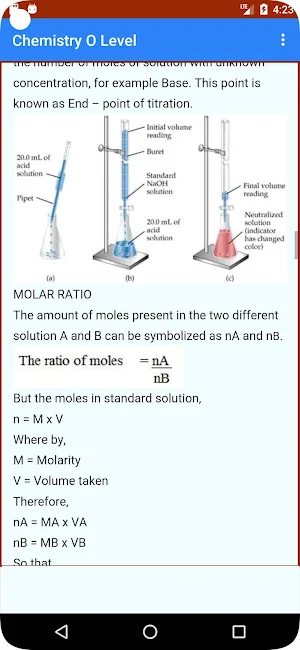
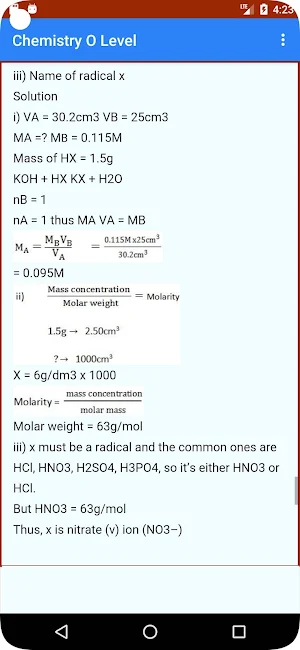
Quantitative Analysis involves the determination of the quantity or concentration of substances in a sample. Volumetric Analysis focuses on measuring volumes in chemical reactions, often involving titrations.
Chemical Kinetics, Equilibrium, and Energetics - Rate of Reaction:
Chemical Kinetics is the study of reaction rates and factors affecting reaction rates, including the rate equation and rate-determining steps.
Chemical Kinetics, Equilibrium, and Energetics - Equilibrium and Energetics:
This subtopic delves into chemical equilibrium, Le Chatelier's principle, and the relationship between energy changes and chemical reactions.
Hardness of Water:
Hardness of Water deals with the presence of calcium and magnesium ions in water and its impact on soap usage and industrial processes.
Ionic Theory and Electrolysis - Electrolysis:
Ionic Theory involves the concept of ions in chemical reactions. Electrolysis is the process of using electricity to drive a non-spontaneous chemical reaction.
Mole Concept:
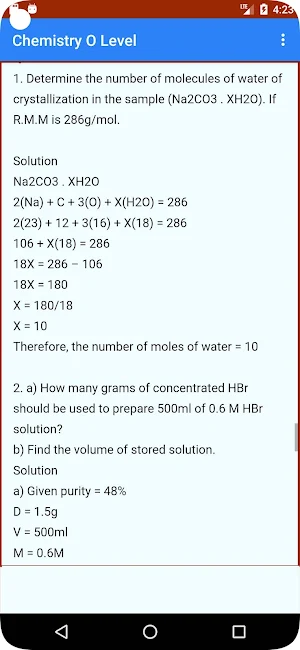
The Mole Concept is a fundamental concept in chemistry that relates the amount of substance to its mass and the Avogadro constant.
Acids, Bases, and Salt - Chemical Equation:
This topic covers the reactions of acids and bases, their properties, and the formation of salts.
Fuel:
Fuel focuses on various types of fuels, their combustion, and energy production.
Periodic Classification - Atomic Structure:
The Periodic Classification topic relates to the organization of elements in the periodic table and the atomic structure of elements.
Water, Hydrogen, Oxygen, and Air:
These subtopics cover the properties, uses, and importance of water, hydrogen, oxygen, and air in various chemical processes.
Combustion, Rusting, and Firefighting:
This topic explores combustion reactions, rusting of metals, and the principles of firefighting.
Laboratory Technique and Safety:
Laboratory Technique and Safety are essential components of practical chemistry, emphasizing proper laboratory practices and safety precautions.
Matter:
Matter involves the study of different states of matter and their properties.
Heat Sources and Flames:
This topic covers the sources of heat and types of flames produced in various combustion reactions.
Scientific Procedure - Introduction to Chemistry:
This topic introduces students to the scientific method and its application in the field of chemistry.
Soil:
This topic covers the study of soil, including its composition, properties, and importance in agriculture and the environment.
Introduction to Organic Chemistry:
Organic Chemistry is the study of carbon-containing compounds. Students learn about the properties, nomenclature, and reactions of organic compounds.
Non-Metals and Their Compounds - General Chemical Properties of Non-Metals:
This topic explores the general chemical properties of non-metals, including their reactivity, reaction with oxygen, hydrogen, and water, and their acidic nature.
Compounds of Metals:
This topic covers the properties, preparation, and uses of compounds of metals, including oxides, hydroxides, and salts.
Quantitative Analysis and Volumetric Analysis:
Quantitative Analysis involves the determination of the quantity or concentration of substances in a sample. Volumetric Analysis focuses on measuring volumes in chemical reactions, often involving titrations.
Chemical Kinetics, Equilibrium, and Energetics - Rate of Reaction:
Chemical Kinetics is the study of reaction rates and factors affecting reaction rates, including the rate equation and rate-determining steps.
Chemical Kinetics, Equilibrium, and Energetics - Equilibrium and Energetics:
This subtopic delves into chemical equilibrium, Le Chatelier's principle, and the relationship between energy changes and chemical reactions.
Hardness of Water:
Hardness of Water deals with the presence of calcium and magnesium ions in water and its impact on soap usage and industrial processes.
Ionic Theory and Electrolysis - Electrolysis:
Ionic Theory involves the concept of ions in chemical reactions. Electrolysis is the process of using electricity to drive a non-spontaneous chemical reaction.
Mole Concept:
The Mole Concept is a fundamental concept in chemistry that relates the amount of substance to its mass and the Avogadro constant.
Acids, Bases, and Salt - Chemical Equation:
This topic covers the reactions of acids and bases, their properties, and the formation of salts.
Fuel:
Fuel focuses on various types of fuels, their combustion, and energy production.
Periodic Classification - Atomic Structure:
The Periodic Classification topic relates to the organization of elements in the periodic table and the atomic structure of elements.
Water, Hydrogen, Oxygen, and Air:
These subtopics cover the properties, uses, and importance of water, hydrogen, oxygen, and air in various chemical processes.
Combustion, Rusting, and Firefighting:
This topic explores combustion reactions, rusting of metals, and the principles of firefighting.
Laboratory Technique and Safety:
Laboratory Technique and Safety are essential components of practical chemistry, emphasizing proper laboratory practices and safety precautions.
Matter:
Matter involves the study of different states of matter and their properties.
Heat Sources and Flames:
This topic covers the sources of heat and types of flames produced in various combustion reactions.
Scientific Procedure - Introduction to Chemistry:
This topic introduces students to the scientific method and its application in the field of chemistry.
Alternatives to Chemistry O Level Notes
Looking for apps like Chemistry O Level Notes? Here are 6 similar Android apps on Google Play. All of them are free to download.
-
Form 2 notes, All subjects
-
Form Three notes, all Subjects
-
Form Five notes, All subjects
-
Form 1 notes : all subjects
-
Advanced Level Geography Notes
-
Mathematics O Level Notes
| App | Rating | Price | Installs | Last updated |
|---|---|---|---|---|
| Chemistry O Level Notes | – | Free | 50+ | Jul 20, 2023 |
| Form 2 notes, All subjects | – | Free | 10+ | – |
| Form Three notes, all Subjects | – | Free | 50+ | – |
| Form Five notes, All subjects | – | Free | 10+ | – |
| Form 1 notes : all subjects | – | Free | 50,000+ | May 11, 2026 |
| Advanced Level Geography Notes | – | Free | 100+ | – |
| Mathematics O Level Notes | – | Free | 100+ | – |
Similar apps on Google Play
- Form 2 notes, All subjects
- Form Three notes, all Subjects
- Form Five notes, All subjects
- Form 1 notes : all subjects
- Advanced Level Geography Notes
- Mathematics O Level Notes
- O Level Physics Notes
- Advanced Level Mathematics
- O Level Geography Notes
- Chemistry O Level Notes
- Secondary School Notes
- Advanced Level Chemistry
- Biology O Level Notes
- Advanced Level Biology
- Advanced Physics (A Level)
- History form 4 Notes
- Mathematics form 1 to 4 notes
- Physics Form 2 Notes
- Physics Form 1-4 Notes
- Physics Notes form 3
- History Form 3 Notes
- History Form 2 Notes
- History form 1-4 notes
- CRE form one to four Notes
- Geography form 2 notes
- Geography Form 1 notes
- Chemistry form 4 notes
- Biology Form 1-4 notes
- Biology form 2 notes
- Biology Form 3 notes
- Agriculture Form 1 to 4 notes
- Form Six Notes : all subjects
- Form 4 Notes (All subjects)
- Update apps all list