

Advanced Level Biology
Education Contains ads
A-level biology notes textbook App for studying and reference.
- Downloads
- 100+
- on Google Play
- Price
- Free
- No in-app purchases
- Updated
- Jul 20
- 2023 · v1.0.A
Screenshots


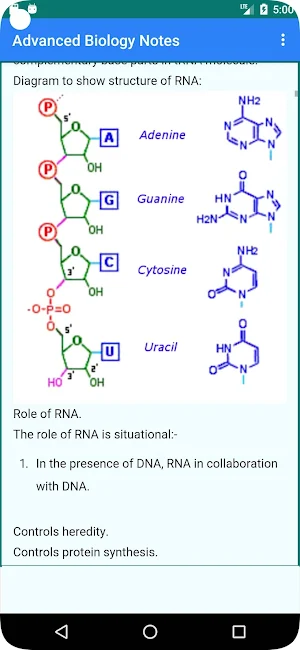
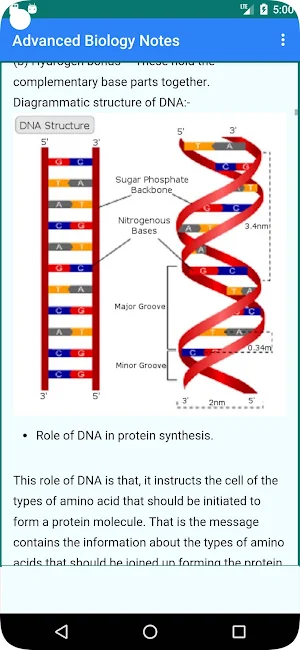
About Advanced Level Biology
Topics included:
Nutrition:
Nutrition focuses on the study of how living organisms obtain and utilize nutrients for growth, energy, and metabolic processes. Subtopics may include the types of nutrients (carbohydrates, proteins, lipids, vitamins, minerals), modes of nutrition (autotrophic and heterotrophic), and the processes of digestion, absorption, and assimilation in humans and other organisms.
Coordination:
Coordination pertains to the regulation and integration of various physiological processes in an organism to maintain homeostasis. It involves the nervous and endocrine systems. Subtopics may include nerve cells (neurons), nerve impulses, synaptic transmission, sensory and motor neurons, and the role of hormones in coordinating physiological responses.
Principles of Classification:
This topic deals with the principles and methods used to categorize and classify living organisms based on their evolutionary relationships and shared characteristics. Subtopics may include taxonomy, binomial nomenclature, hierarchical classification systems, and the three-domain system (Archaea, Bacteria, and Eukarya).
Cytology:
Cytology is the study of cells, which are the basic units of life. It includes the structure, function, and cellular processes within organisms. Subtopics in Cytology 1 and Cytology 2 may involve cell structure, organelles (e.g., nucleus, mitochondria, chloroplasts), cell membrane, cell division (mitosis and meiosis), and cellular transport.
Evolution:
Evolution explores the process of change in living organisms over time, leading to the diversity of life on Earth. Subtopics may include natural selection, adaptation, evidence of evolution (fossils, comparative anatomy, embryology, molecular biology), speciation, and the impact of evolutionary forces on biodiversity.
Ecology:
Ecology is the study of the interactions between living organisms and their environment. Subtopics may include ecosystems, biotic and abiotic factors, populations, communities, food chains and webs, nutrient cycles (carbon, nitrogen), ecological succession, and human impacts on ecosystems.
Reproduction:
Reproduction involves the processes by which organisms produce offspring. Subtopics in Reproduction 1 and Reproduction 2 may include asexual and sexual reproduction, gametogenesis, fertilization, embryonic development, and reproductive strategies in different organisms.
Genetics:
Genetics is the study of heredity and the passing of traits from one generation to another. Subtopics may include Mendelian genetics, Punnett squares, genetic crosses, inheritance patterns (autosomal and sex-linked), genetic disorders, and modern techniques in genetics.
Growth and Development:
Growth and Development cover the processes by which organisms grow, mature, and change throughout their life cycles. Subtopics may include cell differentiation, tissue development, growth hormones, stages of human development, and factors influencing growth and development.
Transportation:
Transportation refers to the movement of substances within an organism, such as nutrients, gases, and waste products. Subtopics may include the circulatory system (blood and heart), respiratory system (gas exchange), and the transport of water and nutrients in plants.
Nutrition:
Nutrition focuses on the study of how living organisms obtain and utilize nutrients for growth, energy, and metabolic processes. Subtopics may include the types of nutrients (carbohydrates, proteins, lipids, vitamins, minerals), modes of nutrition (autotrophic and heterotrophic), and the processes of digestion, absorption, and assimilation in humans and other organisms.
Coordination:
Coordination pertains to the regulation and integration of various physiological processes in an organism to maintain homeostasis. It involves the nervous and endocrine systems. Subtopics may include nerve cells (neurons), nerve impulses, synaptic transmission, sensory and motor neurons, and the role of hormones in coordinating physiological responses.
Principles of Classification:
This topic deals with the principles and methods used to categorize and classify living organisms based on their evolutionary relationships and shared characteristics. Subtopics may include taxonomy, binomial nomenclature, hierarchical classification systems, and the three-domain system (Archaea, Bacteria, and Eukarya).
Cytology:
Cytology is the study of cells, which are the basic units of life. It includes the structure, function, and cellular processes within organisms. Subtopics in Cytology 1 and Cytology 2 may involve cell structure, organelles (e.g., nucleus, mitochondria, chloroplasts), cell membrane, cell division (mitosis and meiosis), and cellular transport.
Evolution:
Evolution explores the process of change in living organisms over time, leading to the diversity of life on Earth. Subtopics may include natural selection, adaptation, evidence of evolution (fossils, comparative anatomy, embryology, molecular biology), speciation, and the impact of evolutionary forces on biodiversity.
Ecology:
Ecology is the study of the interactions between living organisms and their environment. Subtopics may include ecosystems, biotic and abiotic factors, populations, communities, food chains and webs, nutrient cycles (carbon, nitrogen), ecological succession, and human impacts on ecosystems.
Reproduction:
Reproduction involves the processes by which organisms produce offspring. Subtopics in Reproduction 1 and Reproduction 2 may include asexual and sexual reproduction, gametogenesis, fertilization, embryonic development, and reproductive strategies in different organisms.
Genetics:
Genetics is the study of heredity and the passing of traits from one generation to another. Subtopics may include Mendelian genetics, Punnett squares, genetic crosses, inheritance patterns (autosomal and sex-linked), genetic disorders, and modern techniques in genetics.
Growth and Development:
Growth and Development cover the processes by which organisms grow, mature, and change throughout their life cycles. Subtopics may include cell differentiation, tissue development, growth hormones, stages of human development, and factors influencing growth and development.
Transportation:
Transportation refers to the movement of substances within an organism, such as nutrients, gases, and waste products. Subtopics may include the circulatory system (blood and heart), respiratory system (gas exchange), and the transport of water and nutrients in plants.
What’s new
Version 1.0.A · Updated July 20, 2023
A Level Biology Notes
Alternatives to Advanced Level Biology
Looking for apps like Advanced Level Biology? Here are 6 similar Android apps on Google Play. All of them are free to download.
-
Form 2 notes, All subjects
-
Form Three notes, all Subjects
-
Form Five notes, All subjects
-
Form 1 notes : all subjects
-
Advanced Level Geography Notes
-
Mathematics O Level Notes
| App | Rating | Price | Installs | Last updated |
|---|---|---|---|---|
| Advanced Level Biology | – | Free | 100+ | Jul 20, 2023 |
| Form 2 notes, All subjects | – | Free | 10+ | – |
| Form Three notes, all Subjects | – | Free | 50+ | – |
| Form Five notes, All subjects | – | Free | 10+ | – |
| Form 1 notes : all subjects | – | Free | 50,000+ | May 11, 2026 |
| Advanced Level Geography Notes | – | Free | 100+ | – |
| Mathematics O Level Notes | – | Free | 100+ | – |
Similar apps on Google Play
- Form 2 notes, All subjects
- Form Three notes, all Subjects
- Form Five notes, All subjects
- Form 1 notes : all subjects
- Advanced Level Geography Notes
- Mathematics O Level Notes
- O Level Physics Notes
- Advanced Level Mathematics
- O Level Geography Notes
- Chemistry O Level Notes
- Secondary School Notes
- Advanced Level Chemistry
- Biology O Level Notes
- Advanced Level Biology
- Advanced Physics (A Level)
- History form 4 Notes
- Mathematics form 1 to 4 notes
- Physics Form 2 Notes
- Physics Form 1-4 Notes
- Physics Notes form 3
- History Form 3 Notes
- History Form 2 Notes
- History form 1-4 notes
- CRE form one to four Notes
- Geography form 2 notes
- Geography Form 1 notes
- Chemistry form 4 notes
- Biology Form 1-4 notes
- Biology form 2 notes
- Biology Form 3 notes
- Agriculture Form 1 to 4 notes
- Form Six Notes : all subjects
- Form 4 Notes (All subjects)
- Update apps all list