About Les Arts de la scène
Overview
This multidisciplinary Performing Arts unit will allow teachers to explore music, theater, dance, as well as visual arts, writing, reading, and history with their students.
Objectives
• "To learn": Placed within its historical context, each work is described and analyzed to fully understand its historical significance and artistic value. When possible, the creator is also presented, along with some key elements of their biography.
• "To discuss": Students are asked questions about their analysis and understanding of the work. This section begins with questions that we suggest you ask your students orally.
• "To read": A short text allows for a deeper exploration of an aspect of the work. Your students will answer a series of questions about this document.
• "To write": Your students will write a short paragraph on a topic related to the work.
• “To Take Action”: Inspired by the artwork, your students will create a piece (drawing, collage, etc.) on a specific theme.
Contents
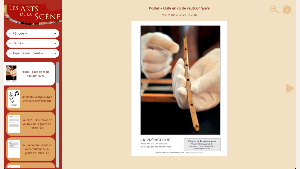
Prehistory (circa 40,000 BC - 3,500 BC): Vulture bone flute from the Hohle Fels cave – Engravings from the Addaura cave: circle dance.
Antiquity (3,500 BC - late 5th century AD): Dance scene in ancient Egypt – Music and song in ancient Greece – The Persians, Aeschylus.
The Middle Ages (late 5th century - late 15th century): Gregorian chant – Troubadour music – The Farce of Master Pathelin.
The Renaissance and the Modern Era (late 15th century - 1789): Court festivities – The Pleasures of the Enchanted Island by Johann Sebastian Bach – The concerto – Vivaldi's Four Seasons – The comedy-ballet – The Bourgeois Gentleman.
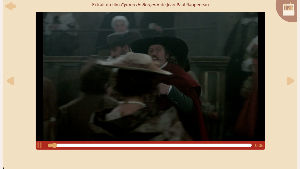
The French Revolution and the 19th century: Beethoven's Third Symphony – Bizet's Carmen – Edmond Rostand's Cyrano de Bergerac.
The 20th century and our time: The Rite of Spring – Debussy's La Mer – Realistic ballet – Parade – Ravel's Boléro – The discovery of jazz – Ionesco's The Lesson – Pierre Henry's Mass for the Present Time – Contemporary ballet – Tricodex – Hip-hop from the street to the stage.
Learn more
Music, dance, theater… The performing arts are among humanity's oldest artistic expressions, as evidenced by the discovery of bone flutes dating back to the Paleolithic era.
They have constantly reinvented themselves throughout history, shaped by influences and cultural exchanges. They are part of the major artistic movements that have shaped Europe, from classicism and romanticism to surrealism. They have also embraced non-European cultures, as demonstrated by the music and dance of the 20th century. This continuous dynamism has given rise to major works that are part of the world's artistic heritage, from Aeschylus's Persians (472 BC) to Ionesco's The Lesson (1951) in the theater.
The multidisciplinary Performing Arts section will allow you to explore with your students: music, theatre, dance, but also visual arts, writing, reading and history.
