
About Subila
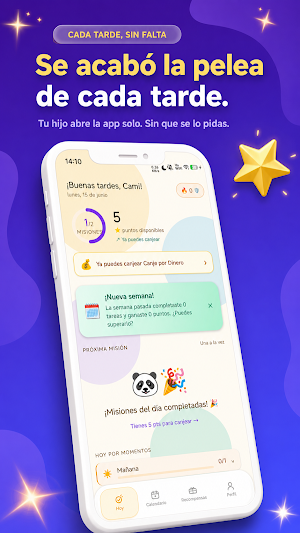
We've all been there.
Every afternoon. Without fail.
It's not your fault. It's not your child's fault. It's just that no one gave us a system that works—one that kids want to use and that doesn't depend on threats or your constant hovering.
The Token Economy: Science Turned into a Game
Scientific Definition
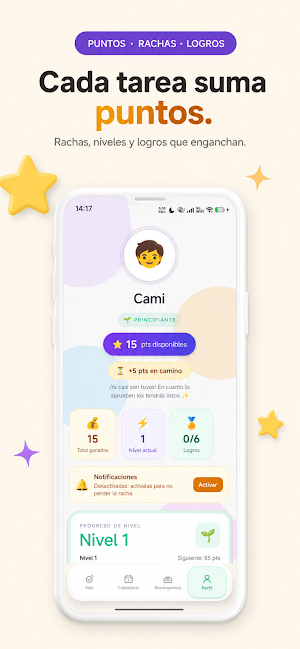
The token economy is a positive reinforcement technique where children earn points (tokens) for completing tasks or exhibiting positive behaviors, and exchange them for rewards of their choosing.
It originated in B.F. Skinner's operant conditioning (Harvard, 1938) and was clinically validated by the American Psychological Association for habit development in children ages 4 to 16.
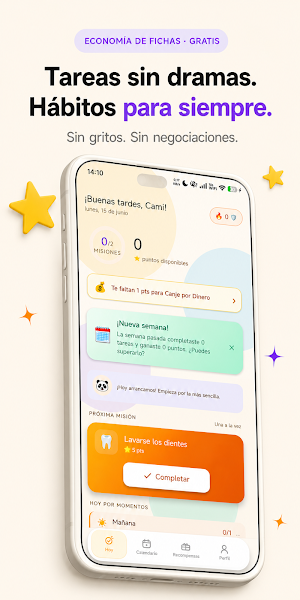
Subila transforms this technique into a digital experience that kids love and parents can manage in seconds.
"No yelling. No negotiations. Just clear agreements that everyone understands."
Token economies work because they activate three brain mechanisms that generate lasting motivation: immediate positive reinforcement, autonomy in choosing rewards, and repetition during the critical window of neural development (4–16 years). It is one of the most empirically supported behavior modification techniques available for families.
Developed at Harvard by B.F. Skinner in 1938 and clinically validated for over 60 years, it is recommended by the American Psychological Association as a first-line intervention for habit development in children.
Immediate Positive Reinforcement: Each token earned activates the brain's reward circuit at the right moment. Not like a screen or sugar—but by creating a lasting association between effort and satisfaction that the child internalizes.
Skinner, B.F. (1938). The Behavior of Organisms. Harvard University Press.
Autonomy in Reward: When the child chooses their own reward, the task ceases to be an imposition and becomes a contract they themselves have signed. Perceived autonomy is the most powerful driver of sustained behavior.
Deci, E.L. & Ryan, R.M. (1985). Intrinsic Motivation and Self-Determination in Human Behavior. Springer.
Critical Window of Development
Between the ages of 4 and 16, the prefrontal cortex is undergoing rapid development. Routines established during this period are not just habits—they are neural circuits that last a lifetime.
Similar Apps

Eudaemon: Bloom every day
Unlimited habits, to-do, diary & more. Offline, private, no ads.

ToxiMeter: Toxic Text Analyzer
Toxic message checker and tone analyzer. Think before you send!

Nomostar: Scan, PDF & AI Tools
AI scanner for docs, IDs and receipts. PDF, OCR, count and translate.

GenTeam: AI Team Chat
Hire your first AI digital employee — a real teammate that ships work.

TOWM
TOWM lets township users log complaints, aiding admin in swift call resolutions

Bracely — Developer Tools
200+ free developer tools. JSON, JWT, PDF, images, SEO & AI writing.
